Growing your email list requires giving people a reason to refer others. Referral incentives are a proven way to do this, turning subscribers into promoters by offering rewards like discounts, free products, or exclusive content. Here's why they work:
- Referrals build trust: 92% of people trust recommendations from friends and family.
- Lower acquisition costs: Referral programs reduce customer acquisition costs (CAC) by 25–50% compared to paid ads.
- Higher retention: Referred customers churn 20–30% less in their first year.
The best incentives include:
- Cash rewards and discounts – Simple, immediate, and effective, especially for high-ticket items.
- Loyalty points/subscription perks – Encourage engagement with minimal expense.
- Early access/product previews – Tap into exclusivity and FOMO.
- Free products/premium upgrades – Strengthen loyalty while reducing churn.
- Tiered and two-way rewards – Motivate sharing with escalating rewards for both parties.
- Social media sharing rewards – Leverage peer networks for viral growth.
- Digital assets like directories hosted on high-converting landing pages – Offer scalable, cost-effective rewards.
Referrals are cost-efficient, with some programs costing as little as $0.17 per subscriber. By aligning incentives with your audience's preferences and keeping costs manageable (10–20% of gross profit per referral), you can grow your email list while maximizing long-term value.
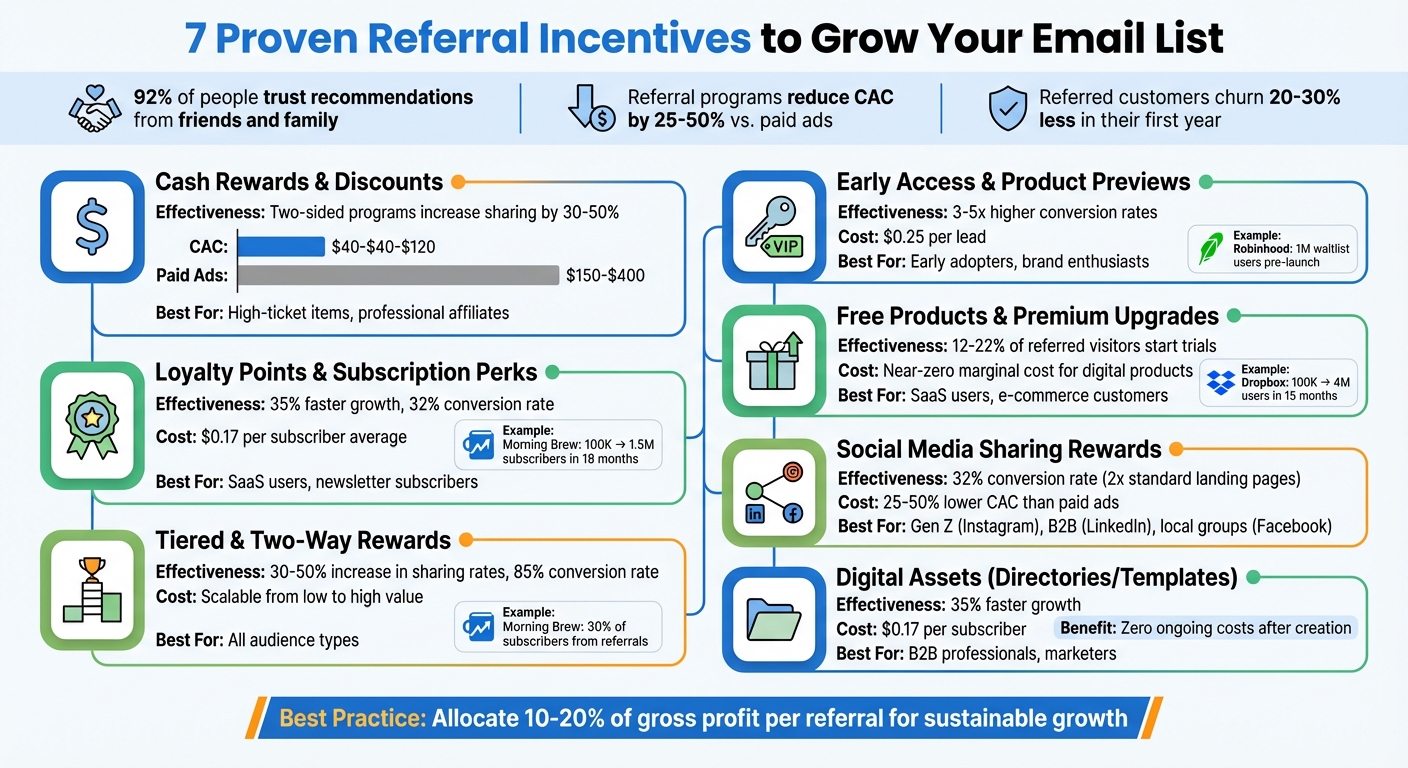
7 Referral Incentive Types: Effectiveness and Cost Comparison for Email List Growth
1. Cash Rewards and Discounts
Effectiveness in Driving Email Sign-Ups
Cash incentives and Amazon vouchers are among the most effective motivators because they’re simple and deliver immediate gratification. Two-sided reward programs - where both the referrer and the referee benefit - can increase sharing rates by 30%–50% and improve click-to-signup conversions by 20%–40%.
Cash rewards are especially effective for businesses with long purchase cycles, such as mattresses, cars, or expensive software. For these high-ticket items, offering a $100 cash reward or gift card provides instant value that feels more meaningful than a standard discount code.
However, the success of these incentives can vary depending on the audience, which we’ll look at next.
Appeal to Target Audience
Different audiences respond to different types of cash incentives. For instance:
- Professional affiliates and content creators favor recurring commissions (usually 15–30%) because these provide scalable, long-term income.
-
Existing customers are more likely to engage with account credits or service discounts. These feel valuable to the customer while being less expensive for the business. As Refgrow explains:
"A customer who earns $20 cash might spend it elsewhere. A customer who earns $20 in product credit stays engaged with your platform".
For high-ticket buyers, large one-time rewards - typically $100 to $200 - are the most effective. On the other hand, small businesses with tight budgets tend to prefer double-sided credits, like a "Give $50, Get $50" program, which creates an appealing win-win scenario while keeping costs manageable.
Cost-Effectiveness for Businesses
Cash rewards don’t just drive conversions - they can also be cost-efficient. Well-designed referral programs often result in a Customer Acquisition Cost (CAC) of $40 to $120, significantly lower than the $150–$400 typically spent on paid search or display ads. To ensure profitability, businesses should align incentives with their margins, aiming to spend just 10–20% of gross profit per referral.
Store credits, in particular, offer an even more affordable alternative to cash payouts. Since the credits keep customers within your ecosystem, the actual cost to the business is limited to the marginal cost of delivering the product or service, making it a smart choice for sustainable growth.
sbb-itb-a84ebc4
2. Loyalty Points and Subscription Benefits
Effectiveness in Driving Email Sign-Ups
Loyalty points and subscription benefits are powerful tools for keeping users engaged without adding significant costs. For SaaS companies and digital newsletters, offering perks like a free month of premium access or bonus storage has minimal expense, making it a smart incentive to encourage sign-ups.
A clever psychological trick, known as the endowment effect, comes into play when rewards are framed as already "owned." This approach naturally increases participation. Similarly, two-sided programs like "Give a month, Get a month" add a social touch, making referrals feel more like gifting rather than self-serving.
The numbers back it up: newsletters with referral programs grow 35% faster on average than those without. Referral conversion rates hover around 32% for newsletters, and referred customers tend to stick around, showing a 15% higher retention rate compared to other acquisition methods. These strategies, however, resonate differently depending on the audience.
Appeal to Target Audience
Different groups respond to these incentives in distinct ways. For SaaS users, feature-based rewards are the big draw. Think "Pro" features, increased API limits, early beta access, or even priority customer support. On the other hand, e-commerce subscribers lean toward rewards like store credits or loyalty points they can save up for future purchases.
For professionals or knowledge-driven audiences, exclusive content is the key. This might include private newsletters, industry insights, gated webinars, or expert Q&A sessions. Meanwhile, community-focused audiences value perks like "Ambassador" status, public shoutouts in newsletters, or access to private groups on platforms like Slack or Facebook.
Take Morning Brew as an example. They introduced a tiered referral system where three referrals unlocked a premium Sunday newsletter, and ten referrals earned a branded mug. This strategy helped them skyrocket from 100,000 to 1.5 million subscribers in just 18 months, with 30% of their initial subscribers coming directly from referrals. As Tyler Denk, Morning Brew's Senior Product Lead, explained:
"Our premium newsletter costs $0 for us to produce outside of human capital. It's free on our end, but it still encourages people to share".
Cost-Effectiveness for Businesses
From a financial perspective, these rewards are incredibly efficient. Unlike cash payouts, loyalty points or subscription credits represent potential revenue that hasn't been collected yet, rather than an outright expense.
Newsletter referrals, for instance, cost an average of just $0.17 per subscriber, far cheaper than the $1–$3 typically spent on other acquisition channels. Subscription-based rewards not only encourage referrals but also act as a subtle marketing tool for paid plans, often nudging free users to eventually upgrade.
Stitch Fix, for example, offers a $25 account credit for each successful referral. This approach keeps new customers engaged on the platform, and referred customers end up spending 40% more in the long run. This dual-purpose strategy drives immediate sign-ups while also boosting revenue over time.
3. Early Access and Product Previews
Effectiveness in Driving Email Sign-Ups
Early access taps into psychological triggers like scarcity, exclusivity, and FOMO (fear of missing out) to encourage immediate sign-ups. The results speak for themselves: Robinhood built a waitlist of 1,000,000 users before its launch by incentivizing referrals to move up the queue. Similarly, Harry's gathered 100,000 email addresses in just one week, with 77% of those sign-ups coming from referrals driven by a tiered early access system. Jet.com also used this strategy to gain 350,000 customers pre-launch, a key factor in its $3.3 billion acquisition by Walmart.
Referred leads often come "pre-sold" because they trust the person who referred them. This trust translates into 3-5 times higher conversion rates and a 37% increase in retention rates compared to other channels. The strategy’s effectiveness varies depending on the audience, as explored below.
Appeal to Target Audience
For power users and early adopters, being among the first to access new features offers a practical advantage and aligns with their desire to stay ahead. In the B2B SaaS space, exclusivity resonates more than discounts, as it positions users as leaders in their field.
Meanwhile, brand enthusiasts and trend-setters are drawn to the status and social recognition that comes with exclusive access. VIP perks often see participation rates of 18-24%, and 62% of consumers say competitive elements like leaderboards motivate them to refer others. For newsletter readers, exclusive content creates a sense of FOMO, encouraging them to share with their networks.
Cost-Effectiveness for Businesses
Early access campaigns are highly cost-efficient. For digital products, this strategy leverages existing development work rather than incurring additional costs like cash payouts or shipping fees. Referral-driven customer acquisition can cost as little as $0.25 per lead, a stark contrast to the $233-$388 typically spent on traditional paid advertising.
Dropbox famously offered 500MB of free storage to both referrers and referees, resulting in 3,900% growth over 15 months. Referrals eventually accounted for 35% of daily sign-ups, with referred customers generating $0.45 more profit per day and having a 16% higher lifetime value than those acquired through other methods.
Ease of Implementation
Implementing early access rewards is straightforward with the right tools. Email automation and referral software can track milestones, send instant access links, and update users’ positions in real time. A tiered structure works well, starting with a low threshold of 3-5 referrals to encourage initial participation.
To maintain momentum, use visual progress bars or updates on waitlist positions. Hamid Shojaee, CEO of GitKraken, highlighted the benefits of this approach:
"Prefinery has allowed us to roll out our beta in a controlled way that encourages invitations and reveals engaged users. It's been a fantastic time saver".
Fraud prevention measures, such as email or phone verification, are essential. By seamlessly integrating early access rewards, businesses can organically grow their email lists while reinforcing their value to users.
The Strategy For Turning Your NEWSLETTER Into A REFERRAL ENGINE
4. Free Products and Premium Upgrades
Offering free products and premium upgrades is a powerful way to boost engagement by directly improving the user experience. This strategy creates a feedback loop where rewards encourage product use, which in turn reduces churn and strengthens customer loyalty. Compared to cash incentives, this approach tends to deliver better results for customer referral programs because it connects users more deeply with the product itself.
Effectiveness in Driving Email Sign-Ups
The numbers speak for themselves. Dropbox's referral program, which offered 500MB of free storage to both the referrer and their friend, helped the company grow from 100,000 to 4,000,000 users in just 15 months. For email marketing SaaS businesses, referral programs also shine - 12–22% of referred visitors start a free trial, and 30–45% of those trial users convert to paid accounts. Additionally, referred customers tend to stick around longer, with churn rates 20–30% lower in their first year compared to customers acquired through other channels.
Take The Pour Over, a newsletter started by Jason Woodruff. By rewarding referrals with free branded merchandise, the newsletter grew from 20,000 to over 100,000 subscribers in less than a year. Similarly, SEO consultant Aleyda Solis saw a 255.9% increase in subscribers and over 800 new referrals in just one month after launching a multi-reward milestone program for her #SEOFOMO newsletter.
Appeal to Target Audience
The type of reward matters because different audiences value different perks:
- SaaS users are drawn to rewards like Pro-level access, increased usage limits (e.g., more API calls or storage), or priority support. These upgrades feel like achievements, creating a stronger emotional connection than cash incentives.
- Newsletter subscribers appreciate exclusive perks like ad-free content, private community access, or digital assets such as templates and eBooks. These rewards enhance the overall experience, making it easier for users to share.
- E-commerce customers often respond well to physical freebies or branded merchandise, which act as tangible reminders of the brand.
- B2B professionals are more likely to value status-based rewards, such as ambassador titles, access to experts, or invitations to exclusive industry events or calls.
Cost-Effectiveness for Businesses
One major advantage of product-based rewards is their low cost. As Refgrow explains:
"The marginal cost of delivering your software to a user is near zero, so the credit represents forgone revenue rather than an out-of-pocket expense." - Refgrow
Digital rewards like eBooks, templates, or guides can be scaled infinitely with almost no additional cost. Even premium upgrades don’t require direct spending - they simply grant access to features that already exist.
For referral programs, a general rule is that rewards should cost 10% or less of the customer lifetime value. This balance is easy to maintain with digital products and software features, which offer high perceived value without significant expense.
Ease of Implementation
Thanks to modern referral software, setting up and managing these programs has never been easier. Automated systems can instantly unlock features or deliver digital rewards as soon as a user hits a referral milestone. This immediate reward keeps participants motivated and engaged.
A tiered system works particularly well. Offer low-cost digital rewards (like a template or guide) for 1–3 referrals, and save more valuable rewards for users who generate 10+ referrals. Adding visual progress bars to show how close participants are to their next reward taps into the "endowed progress effect", which boosts motivation.
For physical rewards, it’s important to consider shipping logistics. Controlling the weight and size of items can help manage shipping costs. Many businesses partner with fulfillment services to handle bulk ordering, storage, and shipping, making the process seamless and scalable. This streamlined approach ensures your referral program runs smoothly while offering a variety of effective rewards.
5. Tiered and Two-Way Reward Programs
Expanding on strategies like cash incentives and loyalty perks, tiered programs take engagement to the next level by offering progressively better rewards. These, combined with two-way rewards, create a win-win scenario: both the referrer and the new subscriber benefit, making sharing feel more like giving a gift than asking for a favor.
Effectiveness in Driving Email Sign-Ups
Pairing tiered milestones with two-way rewards is a highly effective way to grow email lists. By rewarding both parties, these programs make sharing feel natural and even generous. This approach has been shown to increase sharing rates by 30–50% and improve click-to-signup conversions by 20–40%.
Take Morning Brew as an example. Between 2017 and 2019, the business newsletter skyrocketed from 100,000 to 1.5 million subscribers in just 18 months thanks to a tiered referral program designed by Tyler Denk. This initiative contributed to 30% of their total subscriber base, with an impressive 85% conversion rate. Rewards ranged from an exclusive Sunday newsletter (3 referrals) to a trip to their headquarters (1,000 referrals). Similarly, The Hustle used a tiered "Ambassador" program to gain 300,000 subscribers in a matter of months, offering rewards like private Facebook group access (3 referrals) and high-value camera/mic kits (250 referrals). These case studies show how well-targeted rewards can appeal to a wide range of subscribers.
Appeal to Target Audience
Tiered programs cater to a broad audience by offering rewards that align with different levels of engagement:
- Entry-level rewards (1–3 referrals): Items like stickers or digital downloads attract casual readers looking for quick wins.
- Mid-tier rewards (5–15 referrals): Branded merchandise such as mugs or t-shirts appeals to more loyal followers.
- High-tier rewards (25–50 referrals): Backpacks or premium subscriptions incentivize dedicated advocates.
- Elite rewards (100+ referrals): Electronics or VIP experiences capture the attention of super-advocates and influencers.
Two-way programs further enhance appeal by framing referrals as a generous act. As Refgrow puts it:
"The referral is framed as an altruistic act. This makes sharing more comfortable and increases the sharing rate among users who would never share a referral link for personal cash rewards".
This approach has proven effective across industries. PayPal, for instance, used a simple two-way $10 + $10 cash incentive to fuel 7% of their daily new account signups during their peak growth phase.
Cost-Effectiveness for Businesses
Tiered two-way programs are especially budget-friendly for small businesses and newsletters. By structuring early rewards around low-cost or digital items, businesses can keep acquisition costs low while still driving significant growth. Tyler Denk of Morning Brew explained:
"Our premium newsletter costs $0 for us to produce outside of human capital. It's free on our end, but it still encourages people to share".
This approach not only minimizes costs but also delivers long-term value. Referred subscribers tend to have a 16% higher retention rate than those acquired through other channels, and referral programs can reduce customer acquisition costs by 25–50% compared to paid advertising. By reserving high-value rewards for top referrers, businesses can maximize impact without breaking the bank.
Ease of Implementation
Thanks to modern tools, setting up and managing referral programs is easier than ever. Platforms like SparkLoop, Firewards, and Referral Rock automate the tracking of referrals and distribution of rewards, eliminating manual work. Features like visual progress bars tap into the "endowed progress effect", motivating users to complete their next milestone once they've started. Including personalized referral counts in newsletters keeps the program top of mind and encourages continued participation.
6. Social Media Sharing Rewards
Social media sharing rewards take the concept of cash and tiered incentives to the next level by tapping into the power of peer networks. These programs encourage subscribers to share your content across their social platforms, effectively turning them into enthusiastic brand advocates. Unlike traditional referral programs that rely on private email forwards, social sharing creates a viral loop - new subscribers instantly become potential referrers, driving exponential growth.
Effectiveness in Driving Email Sign-Ups
Social media sharing thrives on trust. Peer recommendations on platforms like Instagram, Facebook, and LinkedIn leverage the same 92% trust factor that makes word-of-mouth marketing so powerful. On average, referral links shared via social platforms convert at a rate of 32%, which is more than twice the typical conversion rate of standard landing pages. This makes social sharing one of the most cost-efficient referral strategies.
Each platform brings its own strengths to the table:
- Instagram: Perfect for reaching Gen Z with visually engaging content like Reels and Story stickers, which allow easy, one-tap sharing.
- Facebook: Works well in local or niche groups where recommendations feel authentic and helpful rather than overly promotional.
- LinkedIn: Ideal for B2B newsletters, leveraging professional credibility and success stories to engage a career-focused audience.
These platform-specific strengths make social media sharing a versatile and effective tool for growing your email list.
Appeal to Target Audience
The success of social sharing rewards lies in double-sided incentives, where both the referrer and the new subscriber receive a benefit. This method eliminates the discomfort of asking for a favor, as highlighted by Referral Factory:
"When both the referrer and the friend receive something meaningful, users feel confident inviting others because they are not asking for a favour. They are offering a benefit".
Beyond material rewards, recognition plays a huge role. Public shoutouts, "Ambassador" titles, and leaderboards appeal to status-conscious audiences, especially on platforms like LinkedIn. Short-form videos showcasing rewards or demonstrating the value of your newsletter consistently outperform static posts, making them a go-to strategy for engagement.
Ease of Implementation
Launching a social sharing program is easier than ever, thanks to modern automation tools. Including unique referral links in every newsletter allows subscribers to share with just a click. Pre-written sharing buttons further reduce friction, making the process seamless.
Platforms like SparkLoop and Referral Rock handle the heavy lifting, from tracking referrals to delivering digital rewards automatically. Adding features like progress bars helps keep subscribers motivated by showing how close they are to earning their next reward.
Cost-Effectiveness for Businesses
Social sharing rewards are not only effective but also budget-friendly. Referral programs can slash customer acquisition costs by 25–50% compared to paid advertising. To start small, consider offering digital rewards like exclusive content, ebooks, or access to private communities. These options are low-cost but highly appealing.
Louis Nicholls, Co-founder of SparkLoop, underscores this affordability:
"Newsletter referrals cost an average of $0.17 per subscriber versus $1–$3 from other acquisition channels".
For businesses ready to scale, flash contests with high-value prizes like MacBook Pros can create short-term spikes in activity without breaking the bank. The trick is to reserve premium rewards for top-tier referrers while keeping entry-level incentives simple and accessible. These strategies align perfectly with broader list-building techniques, ensuring maximum growth potential for your email campaigns.
7. Marketing Funnels Directory
Effectiveness in Driving Email Sign-Ups
The Marketing Funnels Directory (https://topmarketingfunnels.com) serves as a strong incentive for referrals by offering subscribers a curated collection of tools, vendors, courses, and books tailored for building marketing funnels. This resource not only attracts initial sign-ups but also encourages referrals. Newsletters that use automated referral systems paired with digital assets like directories tend to grow 35% faster on average.
Appeal to Target Audience
This directory goes beyond standard referral strategies, providing a resource-packed hub for marketers. It’s especially appealing to B2B professionals and marketers who are always on the lookout for actionable insights and industry-specific tools. By consolidating information on topics like social media management funnels, paid advertising, content strategies, and customer journeys, it becomes an indispensable tool. Instead of being seen as just another freebie, it’s positioned as a practical and valuable resource for professionals.
Ease of Implementation
One of the standout features of this digital asset is how easy it is to implement. Digital directories are simple to set up as referral rewards. Once created, there’s no need to worry about shipping, inventory, or manual fulfillment. Using automated referral tools like SparkLoop or Firewards, subscribers can instantly gain access once they meet referral milestones. This automation allows businesses to scale their programs effortlessly.
Cost-Effectiveness for Businesses
As a digital product, the Marketing Funnels Directory has virtually no ongoing costs after its initial creation. Unlike physical rewards or monetary incentives, it can be distributed endlessly without additional expenses. On average, digital directories bring acquisition costs down to $0.17 per subscriber, a figure that’s far lower than the typical $1–$3 per subscriber seen with paid advertising. For businesses focused on growing email lists while keeping expenses in check, this directory offers a highly efficient and scalable solution. It’s a win-win for reducing costs and boosting subscriber growth.
Conclusion
Growing your email list through referrals boils down to offering the right incentive for your audience. Cash rewards are a hit with professional affiliates, while discounts and store credits resonate with repeat buyers. For subscribers who value exclusivity, perks like early access or unique content can be highly motivating. The trick? Understand what drives your audience to share.
And the stats back it up: 92% of consumers trust recommendations from people they know. This makes referrals one of the strongest tools for growth. When your incentives align with subscriber preferences, you’ll see higher participation rates and lower acquisition costs. In fact, referral programs often reduce Customer Acquisition Cost (CAC) by 25% to 50% compared to paid ads.
To get started, identify your most enthusiastic subscribers using Net Promoter Score (NPS) surveys - those scoring 9 or 10 are your best advocates. From there, experiment with different reward structures or use an all-in-one digital marketing tool to manage your campaign. Double-sided rewards, where both the referrer and the new subscriber benefit, tend to outperform one-sided programs with 30% to 50% higher sharing rates.
Keep your rewards financially sustainable by staying within your average CAC. A good rule of thumb? Allocate 10% to 20% of gross profit or around 10% of Customer Lifetime Value (LTV) to referral incentives. This approach ensures growth without cutting into your margins.
The right referral incentive isn’t just an added bonus - it’s a strategic move to grow your email list and build deeper connections with your audience. Test, iterate, and let trusted recommendations do the heavy lifting for your growth.
FAQs
What’s the best referral reward for my audience?
When it comes to referral rewards, the "best" option often hinges on what aligns with your brand and resonates with your audience. Common choices include cash payouts, gift cards, store credits, free products or services, or even exclusive content that adds a sense of privilege.
One strategy that tends to work well is offering double-sided rewards. This means both the person making the referral and the one being referred receive a benefit. This approach creates a win-win situation, making it more enticing for people to participate and boosting the likelihood of sign-ups.
How big should my referral incentive be?
The perfect referral incentive size varies depending on your brand, products, and target audience. Your reward should strike a balance: attractive enough to spark interest but still financially feasible. Industry standards often suggest rewards between $10 and $50 or more, though the exact amount depends on your audience. The key is to offer something that resonates with their interests and encourages them to take action.
How do I prevent referral fraud?
To keep referral fraud at bay, focus on strategies that ensure both smooth user experiences and strong security. Start with friction-free onboarding to make the process easy while collecting accurate data. Pair this with robust tracking systems that monitor referrals in real time, helping you spot any unusual activity quickly.
Incentives also play a big role. Consider using tiered or personalized rewards - this not only motivates genuine participants but also makes it less appealing for fraudsters. Regularly reviewing referral data is another must. Transparent dashboards can help you pinpoint suspicious patterns and take action before issues escalate.
By blending smart technical tools with carefully designed rewards, you can safeguard the integrity of your referral program while keeping participants engaged.