A loyal YouTube community is built on repeat interaction, not subscriber count. If I want people to come back, comment, join live chat, and buy from me later, I need to do four things well: define who the channel is for, post formats that invite people in, manage the space, monitor brand mentions, and use feedback to shape what I make next.
Here’s the short version:
- Community beats raw reach when I want repeat viewers and stronger trust
- Clear identity and simple rules help people know why they belong
- Lives, recurring series, polls, and comments give viewers reasons to return
- Fast replies in the first 48 hours can help early video momentum
- Moderation and monthly metrics checks show whether the channel is getting stronger or slipping
- Trust during sponsors, breaks, and changes keeps people from drifting away
A few numbers stand out:
- YouTube has more than 2.7 billion monthly active users
- Replying to 50+ comments within 2 hours may improve early distribution by 15% to 20%
- A pinned question can increase replies by up to 30%
- Community posts start at 500 subscribers
- Channel Memberships start at 1,000 subscribers
This article boils the process down to one simple system: give people a clear reason to join, a steady reason to return, and proof that their input matters.
BUILD a Thriving YouTube Community with These 5 Proven Strategies!
sbb-itb-a84ebc4
Build the Foundation: Positioning, Values, and Community Rules
Once people know why they belong, the next step is to show them how they belong. That starts with three simple pieces: who you serve, what you stand for, and how people are expected to act. Skip this part, and it gets a lot harder to build a group that feels connected.
Define Your Niche, Voice, and Member Identity
The strongest communities tend to grow around a narrow topic and a clear sense of who the member is. Your niche shapes the tone, the topics, and that feeling of “this is for people like me.”
Giving your audience a name can help turn casual viewers into a group with a shared identity. As YouTube's own blog puts it:
"Giving your community a name... can create a shared identity and strengthen connections. This simple act can transform a group of viewers into a cohesive community." - YouTube Blog
You don’t need a massive audience to start building that culture. You can do it with a small core of repeat viewers before you scale. That identity should also show up in the first things people see, including your rules.
Write Clear Community Guidelines That Align With YouTube Rules
Keep your guidelines short and specific. Spell out what’s welcome, what isn’t, and what happens when someone crosses a line. Every rule should line up with YouTube's Community Guidelines, since your channel rules can’t override platform policy.
"Establish clear expectations: Set ground rules and what kind of behavior is acceptable to create a safe space. All content should adhere to YouTube's Community Guidelines." - YouTube Help
A welcome message in the first week helps set expectations and signal the tone right away. The rules set the bar. What you do each day shows people you mean it.
Act Like a Host, Not Just a Publisher
A publisher posts and leaves. A host stays in the room.
That means showing up early, pinning a question, replying fast, and calling out contributors by name. Small actions like these can change the feel of the whole channel.
Replying to 50 or more comments within two hours can lift initial distribution 15% to 20%, and a pinned open-ended question can increase replies by up to 30%.
One more thing matters here: close the loop. If you run a poll, reflect the results in your next video so people can see that their input mattered.
Content Formats and Interaction Habits That Build Loyalty
Choose Formats That Invite Participation
Once your channel has a clear voice, the next step is choosing formats that make it easy for people to join in. Not every format builds loyalty in the same way.
Shorts are great for discovery, but they often pull in one-time viewers who don't come back. Tutorials for digital products help people fix a problem, but they can feel like a one-and-done visit if each video stands alone.
The strongest loyalty usually comes from formats that give people a reason to return and take part:
- Live streams - real-time interaction with the deepest level of back-and-forth; announce them ahead of time and moderate closely
- Recurring series - a steady name, format, and release schedule that gives viewers a habit to follow
- Community posts - easy touchpoints between uploads through polls, questions, and updates
- Behind-the-scenes - helps people feel closer to the channel; tie it back to your main brand
- Tutorials - strong for retention when built as a series instead of standalone videos
Live streams and recurring series do the most for retention. Shorts play a different role: reach.
Use Comments, Community Posts, and Live Chat Strategically
After you pick your formats, give each interaction surface a clear job. That keeps your effort focused instead of scattered.
Community posts unlock at 500 subscribers. They're one of the best ways to keep returning viewers engaged between uploads. And within that format, polls tend to get the highest engagement rates of any Community post type. So don't waste them on filler. Use them to test topics before you start production.
Timing matters too. Check YouTube Analytics to see when your audience is most active, then schedule posts during those windows.
"The Community Tab is another medium through which YouTube channels can converse and interact with the audience." - Hassaan Khan, Senior Contributing Writer, ContentStudio
Comments and live chat matter most in the first 48 hours after a video goes live. That's the stretch when YouTube is testing performance signals. Early activity like replies, Community post announcements, and shares can help the video pick up momentum.
Build Recurring Shows, Rituals, and Recognition Moments
Loyalty grows when viewers know what's coming next. A weekly series with the same name, format, and release day gives people something to look forward to. It turns random viewing into a habit.
Recognition matters just as much. Mentioning a regular commenter by name during a live stream, or using a viewer's question in a video, can change the whole relationship. A passive watcher starts to feel like part of the channel. These small moves take little effort, but they give people a strong reason to stick around.
Channel Memberships unlock at 1,000 subscribers. You can use memberships to deepen that sense of recognition with badges, early access, and members-only posts.
Manage Community Culture With Moderation, Analytics, and Funnel Alignment
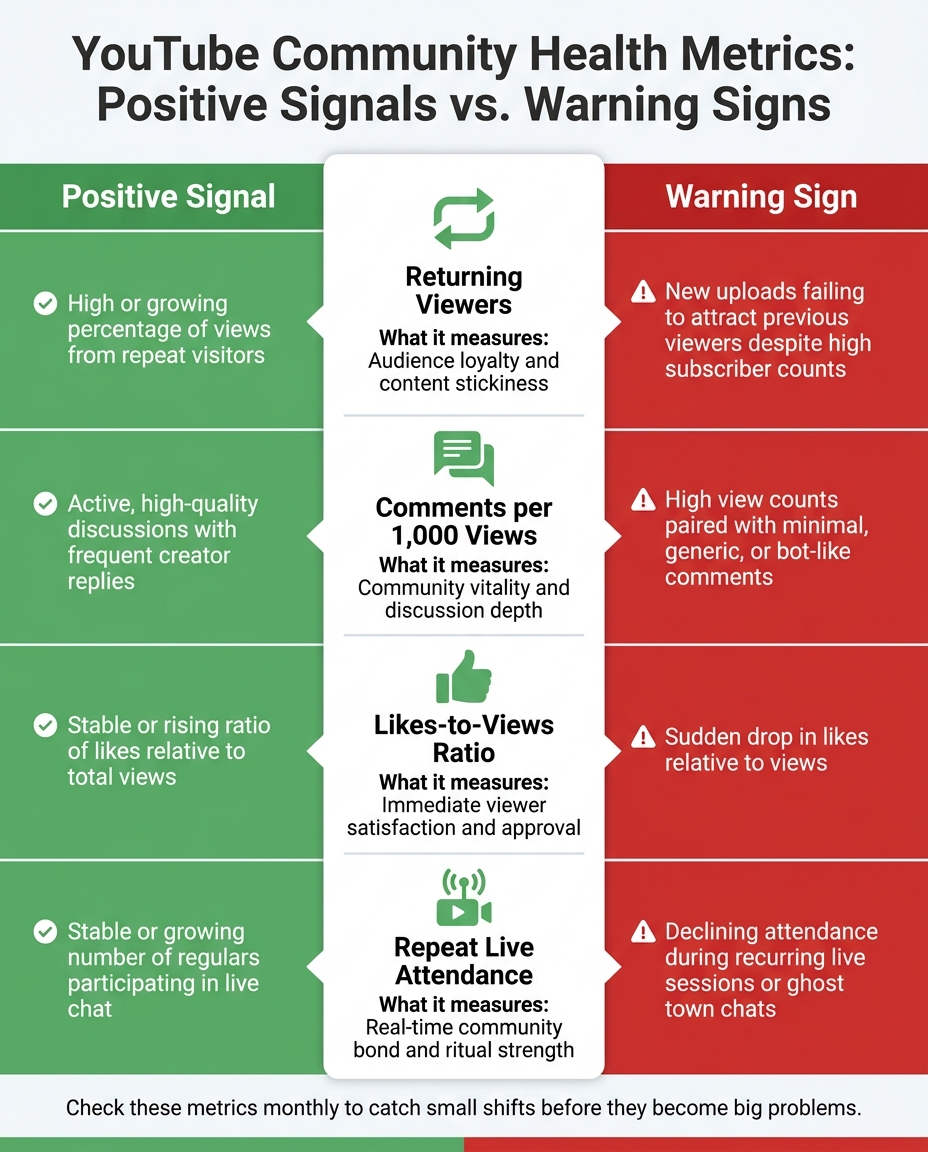
YouTube Community Health Metrics: Positive Signals vs. Warning Signs
Set Up Moderation Rules for Comments and Live Chat
As your channel grows, moderation stops being a side task and becomes part of the community itself. If standards are fuzzy, spam, off-topic threads, and repeat rule-breaking can wear down the kind of space you're trying to create.
Set comment filters, blocked-word lists, and live chat rules before each upload. That way, spam and personal attacks don't get to set the mood first.
The aim isn't to remove disagreement. It's to keep disagreement constructive. Strong communities leave room for debate, but there's a clear line between honest pushback and personal attacks or repeat violations. Hold that line the same way every time so viewers can see the rules actually mean something.
Use community posts to restate rules, answer questions, and pull off-topic threads back toward the channel.
That same steady approach should show up in every comment thread, live chat, and community post.
Track the Metrics That Reflect Community Health
View counts tell you about reach. They don't tell you much about the shape of the community.
To judge community health, track returning viewers, comments per 1,000 views, likes-to-views ratio, shares, and repeat live attendance. A healthy community is also characterized by a creator who acts like a host, replying to comments so subscribers come to expect and value interaction. The metrics below give you a practical way to check whether that culture is getting stronger or starting to slip.
| Metric | What It Measures | Positive Signal | Warning Sign |
|---|---|---|---|
| Returning Viewers | Audience loyalty and content stickiness | A high or growing percentage of views coming from repeat visitors | New uploads failing to attract previous viewers despite high sub counts |
| Comments per 1,000 Views | Community vitality and discussion depth | Active, high-quality discussions and frequent creator replies | High view counts paired with minimal, generic, or bot-like comments |
| Likes-to-Views Ratio | Immediate viewer satisfaction and approval | A stable or rising ratio of likes relative to total views | A sudden drop in likes relative to views |
| Repeat Live Attendance | Real-time community bond and ritual | Stable or growing numbers of regulars participating in live chat | Declining attendance during recurring live sessions or ghost town chats |
Check these once a month so small shifts don't disappear in week-to-week noise.
Those signals can help you see where the culture is getting stronger and where it's starting to drift.
Connect YouTube Community Activity to Your Wider Funnel
Repeat engagement on YouTube supports the wider marketing funnel by driving awareness and retention. Community posts can also send viewers to other channels and deeper video content.
Use end screens, cards, description links, and pinned comments to guide loyal viewers from community content to deeper videos, memberships, or offers.
As the channel grows, those same patterns can show whether trust is holding through sponsorships, channel changes, and viewer feedback.
Retain Trust, Evolve the Community, and Next Steps
Keep Trust During Growth, Changes, and Sponsorships
Once your community has its rules and rituals, the next job is simple: protect trust as the channel changes.
Growth can shift expectations fast. Upload schedules change. Life happens. Sponsorships show up. If you don't explain what's going on, people fill in the blanks on their own.
Use the Community tab to keep people in the loop about delays, schedule changes, and breaks. A short update can go a long way. It shows viewers that there's a person behind the channel and that their time matters.
When money enters the picture, be clear about it. Monetization should feel like a fair exchange, not a random cash grab. Put the audience first, and make sure any paid offer has a clear reason to exist.
"Fan funding is about value exchange, not simply asking for money. Offering valuable content and experiences that fans can opt into is key to building a sustainable model."
Use Feedback to Improve the Community Over Time
The same comments and polls that drive engagement can also shape what you make next.
Treat comments and polls as direct feedback, not background noise. Use polls to choose future topics, then mention the results in the next video so viewers can see that their input shaped the content.
You should also watch audience retention curves in YouTube Studio. If you see a sharp drop around 30 seconds, that's a strong sign the hook didn't land. Fix that in the next upload.
As the audience grows, pay close attention to repeat frustrations and repeat requests in the comments. Group that feedback into themes, then plan future videos around documented audience needs instead of guesswork.
Conclusion: The Core System for a Loyal YouTube Community
Define your identity, show up consistently, enforce your standards, and let audience feedback shape what comes next.
Loyalty doesn't come from luck. It comes from clear identity, steady participation, strong moderation, and a feedback loop that helps each new video get closer to what the community wants.
FAQs
How do I build community with a small channel?
Building community with a small channel is achievable through steady, genuine engagement. The YouTube community tab can help a lot here. Use it for updates, polls, and behind-the-scenes posts so viewers feel involved, not just talked at.
It also helps to stay active in the comments. Reply when you can, spark conversation, and share upcoming videos or your social profiles to keep the interaction going beyond a single upload. Even with a small subscriber base, that kind of effort can build a stronger connection and deeper loyalty.
What should I do if comments turn negative or toxic?
Remove toxic comments, but leave room for constructive criticism so your community feels safe and positive.
Use YouTube’s built-in moderation tools to help with this. For example, you can hold potentially inappropriate comments for review, then check those held comments every day.
When a comment is plainly toxic, hide or delete it and move on. Don’t feed the fire. But when someone shares criticism in good faith, respond in public with acknowledgment and thanks. That shows people you’re listening without getting pulled into arguments with hostile commenters.
Which YouTube metrics best show community loyalty?
The clearest signs of community loyalty are engagement signals: comments, likes, shares, and click-through rates on community posts.
These metrics show that people aren’t just seeing your content. They’re interacting with it, which points to a stronger connection with your audience.