Geographic segmentation helps businesses target customers based on their location, considering factors like climate, population density, and local preferences. This article highlights seven tools that make location-based marketing more precise and effective. Here's a quick overview of the top tools and resources and their capabilities:
- Google Analytics: Offers free location-based insights at country, state, and city levels. Integrates with Google Ads for geo-targeted campaigns.
- Facebook Audience Insights: Provides detailed geographic segmentation for ad targeting on Facebook and Instagram, including local residents and travelers.
- HubSpot: Automatically updates contact profiles with geographic details for real-time segmentation and integrates with major CRMs.
- QuestionPro Research Suite: Uses survey data and IP tracking to identify regional trends and segment audiences.
- Segment: Combines customer data from multiple channels, enabling real-time geographic targeting with geofencing capabilities.
- Avery AI: Leverages AI to create highly specific micro-segments and predictive analytics for location-based campaigns.
- IP-Based Targeting Tools: Tracks website visitors' locations with high accuracy, enabling localized content and compliance with location-specific regulations.
Quick Comparison:
| Tool | Starting Price | Key Feature | Best For |
|---|---|---|---|
| Google Analytics | Free | Basic location reporting | All business sizes |
| Facebook Audience Insights | Free (ad spend) | Local and traveler audience targeting | Social media advertisers |
| HubSpot | Varies by plan | Automated geographic data enrichment | Sales and marketing teams |
| QuestionPro | Quote-based | Survey-based geographic insights | Market researchers |
| Segment | Free to $120/month | Real-time geographic targeting | Data-driven companies |
| Avery AI | $45–$200/month | AI-powered micro-segmentation | Advanced personalization needs |
| IP-Based Targeting Tools | $9/month | Real-time visitor location tracking | E-commerce and global sites |
Each tool offers unique features, so choose based on your business size, budget, and goals. Whether you're running localized ads or analyzing customer behavior by region, these tools can help refine your targeting for better results.
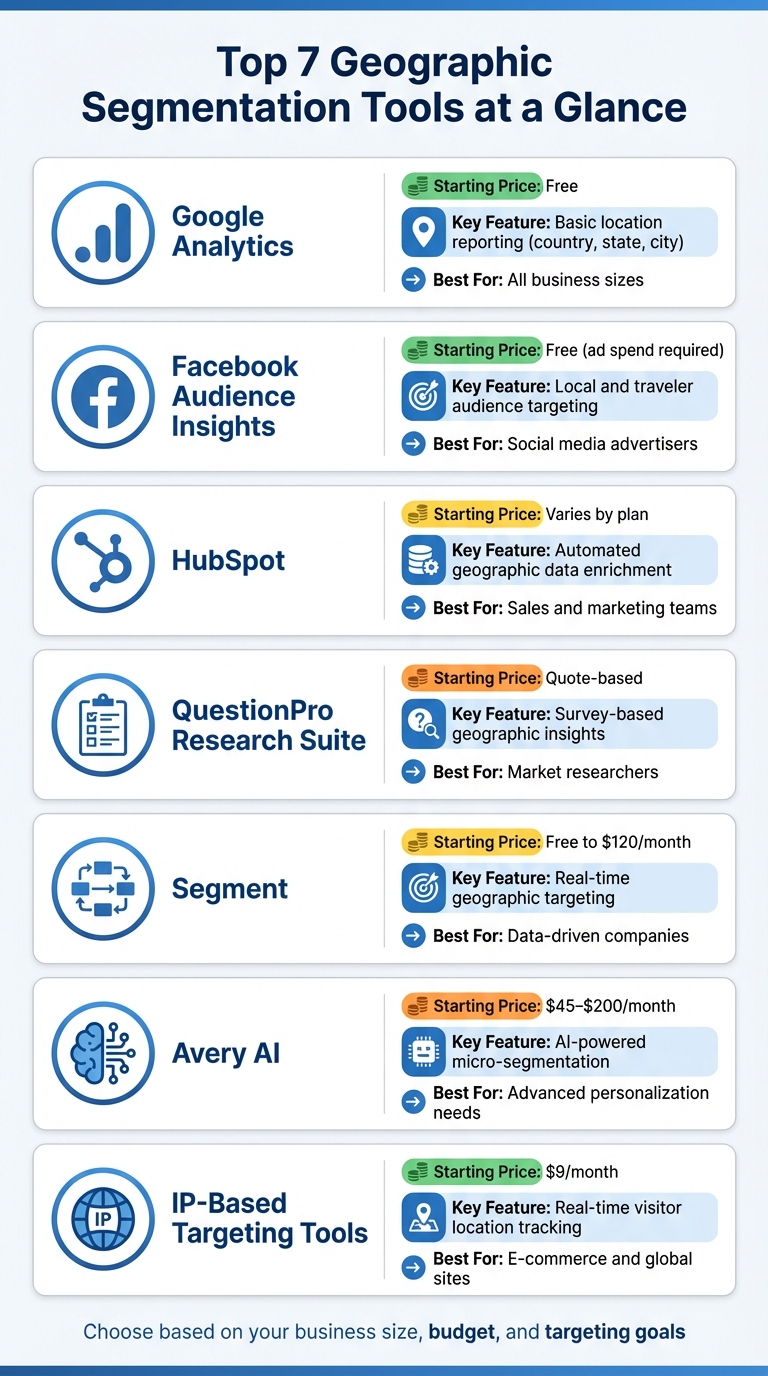
Geographic Segmentation Tools Comparison: Features, Pricing and Best Use Cases
How Is Geospatial Visualization Used In Marketing? - The Friendly Statistician
sbb-itb-a84ebc4
1. Google Analytics
Google Analytics gives you the tools to break down your audience by location, whether that's by country, state, region, or city. You can zoom out for a broad national view or get granular with metropolitan area data. For instance, if certain cities show higher conversion rates, it might be worth adjusting your ad spend to focus on those areas. Let’s dive deeper into how its geographic targeting features can help.
Geographic Targeting Capabilities
Google Analytics provides three main types of geographic segments:
- User segments: Tracks all activity from users in a specific location.
- Session segments: Focuses on sessions that start in a particular area.
- Event segments: Captures specific actions, like purchases, within a chosen city.
The "At any point" feature is especially handy - it includes users who meet a geographic condition at any time during the reporting period. You can also use operators like "is one of" to group locations. For example, by setting "Country ID is one of US, CA, MX", you can analyze data for users across North America as a whole.
Interestingly, businesses in industries like Travel, Real Estate, and Education saw a 5% boost in conversions when they switched from "Presence" targeting to "Presence or Interest." This approach captures not only users physically in a location but also those who have shown interest in it.
Integration with Other Tools or Platforms
One of the standout features of Google Analytics is its seamless integration with Google Ads. This allows you to create geo-targeted campaigns based on real performance data. For example, if you notice strong conversions from a city like Chicago, you can craft ad copy that speaks directly to that audience, such as "Cheap tickets from Chicago".
For more advanced analysis, you can export GA4 data to BigQuery. This opens up opportunities to use datasets like Google Maps Platform’s Places Insights or Street View imagery, giving you a deeper understanding of geographic trends.
Scalability for Businesses of Different Sizes
Google Analytics 4 is free and works well for small to mid-sized businesses, with sampling limits that are unlikely to be an issue for these companies. It supports up to 50 saved segments on standard properties. For larger enterprises, Google Analytics 360 steps in, offering up to 200 saved segments. Plus, its integration with BigQuery ensures it can handle massive datasets, making it a great fit for large-scale geospatial analysis.
2. Facebook Audience Insights
Facebook Audience Insights is a feature available through Facebook Ads Manager that provides detailed analytics to help you understand who is engaging with your brand. It allows you to segment audiences across various geographic levels, including country, state/region, city, zip/postal code, and Designated Market Areas (DMA) within the United States. This tool supports targeting up to 25 countries or 250 cities in a single group, making it a powerful resource for precise audience segmentation.
Geographic Targeting Capabilities
Facebook divides audiences into four key categories: everyone in a location, local residents, recent visitors, and travelers passing through. For example, the "People traveling in this location" segment focuses on users whose most recent location is within your target area, even if their home is over 100 miles away. This is particularly helpful for businesses like hotels looking to attract out-of-town visitors rather than locals.
You can also fine-tune your targeting by pinning a specific location and setting a radius between 1 and 50 miles. This is especially useful for physical stores aiming to reach nearby customers. Additionally, the exclusion feature allows you to omit certain cities or zip codes within a broader region, offering even greater control.
An analysis by eBay.co.uk in 2022 revealed that the UK had a monthly active audience of 1–1.5 million, with London having the highest audience volume. However, London also showed a 32% lower concentration compared to the national average.
Integration with Other Tools and Platforms
Facebook Audience Insights works seamlessly with Meta Business Suite and Ads Manager, making it easy to transition from audience research to ad campaign execution. This data is essential when you build a profitable online business through targeted marketing. Geographic data refined through the tool can be saved as a "Saved Audience" and used across Meta’s platforms, including Instagram and Messenger. The Audience Overlap tool further enhances efficiency by comparing geographic segments to avoid internal competition in ad targeting. For businesses managing multiple locations, the platform also supports bulk uploading of geographic data, simplifying the process of managing numerous addresses or zip codes.
Jon Loomer, Founder of Jon Loomer Digital, noted, "Location Targeting on Facebook allows us to specify the exact geographic areas for our ads".
3. HubSpot
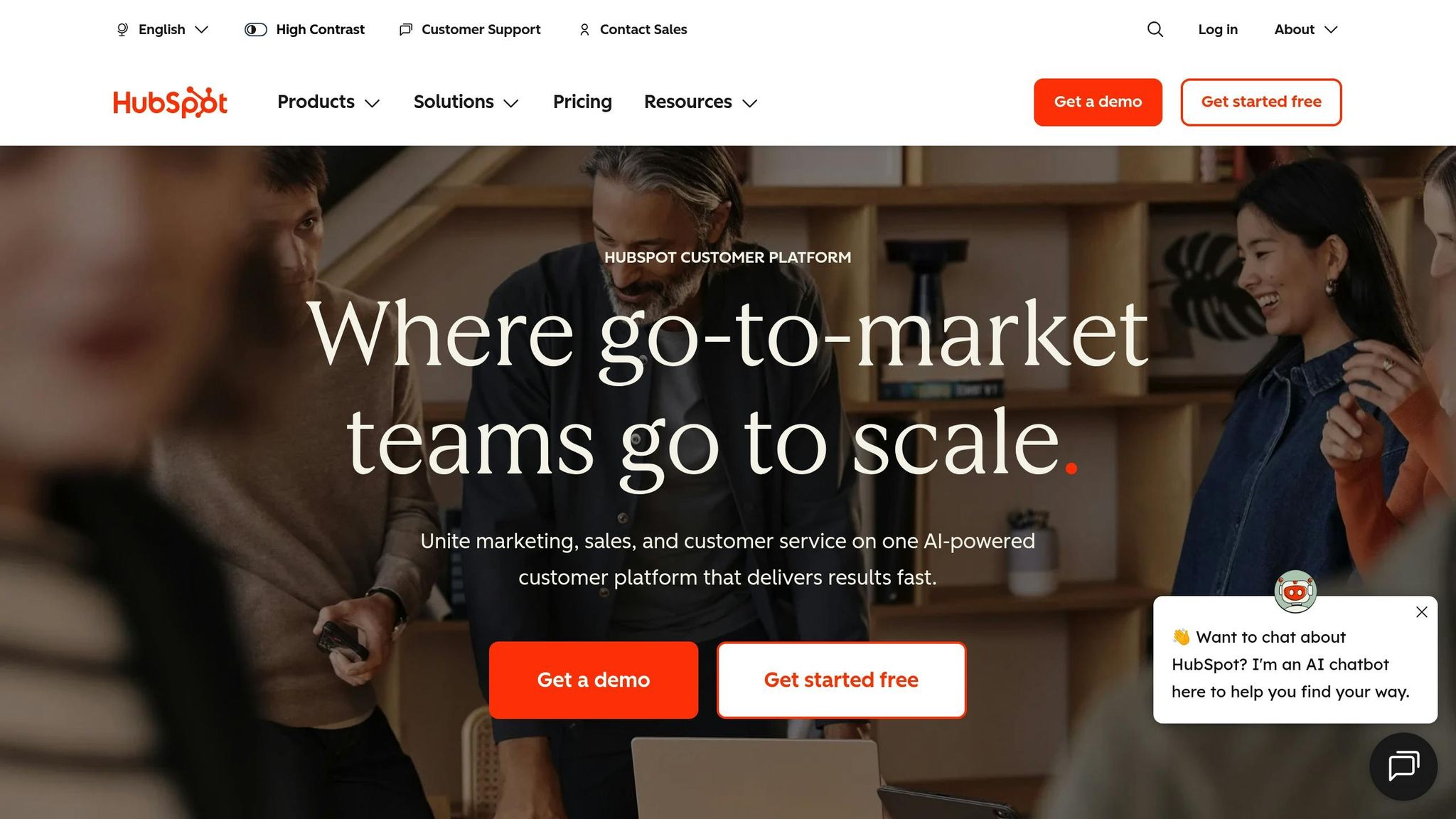
HubSpot's Smart CRM takes geographic segmentation to the next level by maintaining detailed contact profiles and automatically updating segments as data changes. With its Dynamic Lists, the platform groups contacts based on geographic details and keeps these lists updated in real-time. For example, if someone relocates from New York to California, HubSpot ensures they're seamlessly reassigned to the correct regional segment.
Geographic Targeting Capabilities
HubSpot simplifies geographic targeting through automated data enrichment, which fills in missing details like City, State, and Postal Code using information from business emails and domain names. This feature automatically updates over 15 company properties and 10 contact properties every month, ensuring your data stays accurate.
| Property Type | Enriched Geographic Fields |
|---|---|
| Contact Properties | City, Country, Country Code, State/Region, State/Region Code |
| Company Properties | City, Country/Region, Country/Region Code, Postal Code, State/Region, State/Region Code, Street Address |
Geographic targeting can be as broad as continents or as specific as neighborhoods, factoring in variables like climate, population density, and local preferences. To maintain consistency, dropdown menus are used for geographic properties instead of free-text fields. You can also create segments based on recent activity, maximizing relevance when it matters most.
Integration with Other Tools or Platforms
HubSpot offers seamless integration with external platforms, making it an excellent choice for businesses looking to expand their geographic segmentation efforts. With Data Sync, HubSpot enables two-way, real-time synchronization with tools like Salesforce and Microsoft Teams. Geographic segments created in HubSpot can fuel coordinated campaigns across email, Facebook and LinkedIn ads, SMS, and even website personalization.
For businesses with more specialized needs, HubSpot provides custom field mapping for syncing unique geographic variables, such as climate zones or custom sales territories. However, this feature requires a Data Hub Starter or Professional plan. These integrations ensure that your geographic segmentation efforts align seamlessly with your broader marketing strategy.
Scalability for Businesses of Different Sizes
HubSpot caters to businesses of all sizes, offering a free plan for small businesses and demos for larger enterprises. Whether you're targeting a specific neighborhood or an entire continent, the platform’s flexibility makes it easy to scale your efforts. Features like data enrichment are available across various HubSpot tools, including Marketing Hub, Sales Hub, Service Hub, Data Hub, and Content Hub, in Starter, Professional, and Enterprise tiers.
As your business grows, HubSpot ensures your segments stay up-to-date, keeping your targeting precise and effective during periods of expansion.
"Scalability is one of geographic segmentation's greatest strengths. While you can zoom out and create large segments, you can also zoom in and target more specific groups." - HubSpot
4. QuestionPro Research Suite
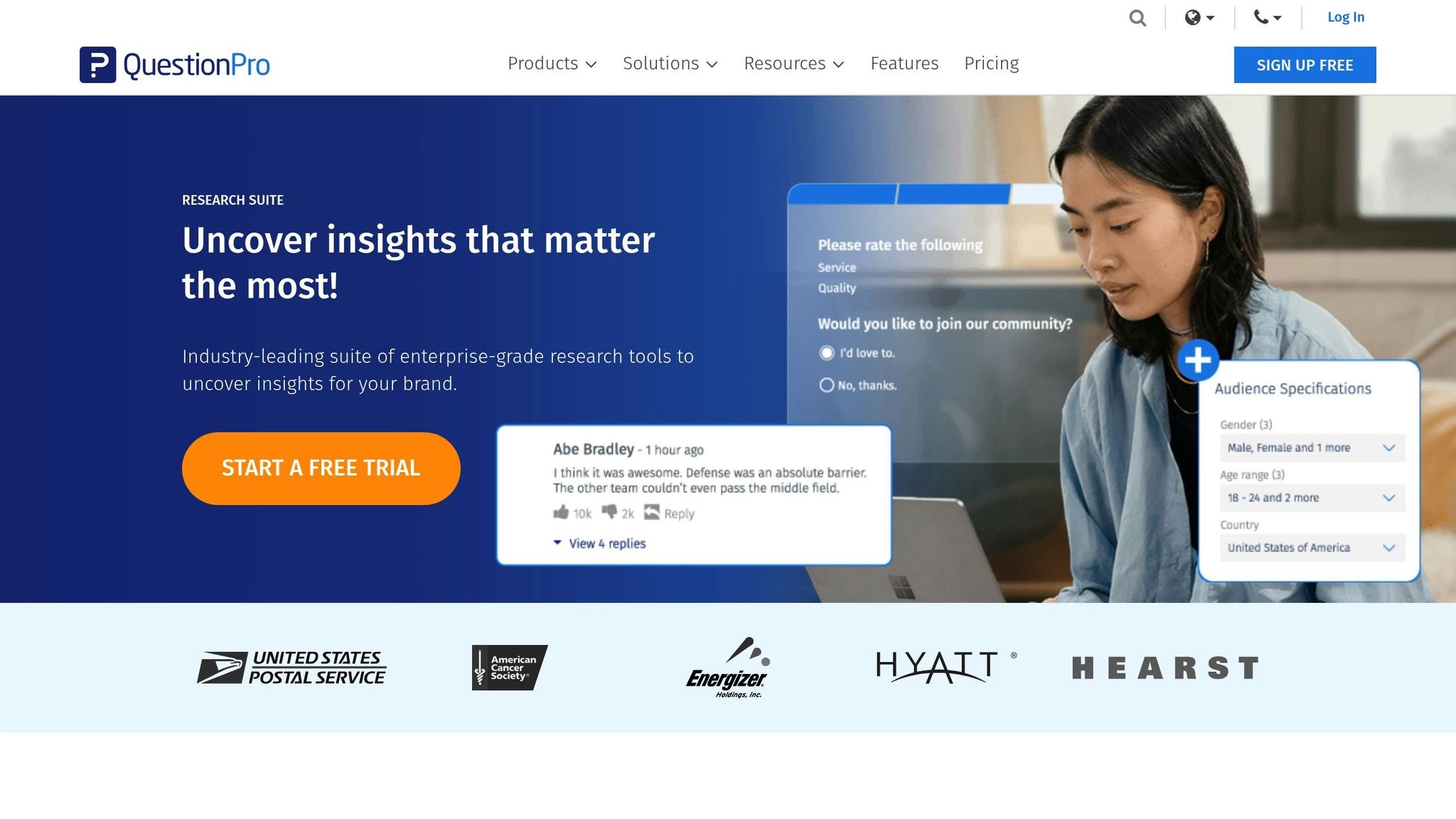
QuestionPro Research Suite stands out as a powerful tool for refining geographic segmentation through survey data. It uses real-time insights and offers extensive customization options to identify regional trends. The platform automatically tracks respondent locations using IP-based technology, capturing data at the city, regional, and country levels. Additionally, its Map Question Type allows users to gather precise location details from respondents.
Geographic Targeting Capabilities
The platform’s advanced filtering system makes it easy to create regional segments. For instance, entering comma-separated values like "US, CA, MX" can define a North America segment. Users can also combine these filters with up to 255 custom variables to segment audiences by factors such as demographics or purchasing behavior. These geographic filters integrate seamlessly with advanced modules such as Trend Analysis and TURF (Total Unduplicated Reach and Frequency) Analysis, providing deeper insights.
Integration with Other Tools or Platforms
QuestionPro connects effortlessly with leading CRM platforms like Salesforce, Microsoft Dynamics, and HubSpot, enabling businesses to sync geographic survey data with existing customer profiles. It also integrates with business intelligence tools like Tableau and Power BI for spatial data visualization. For those looking to combine survey insights with website behavioral data, the platform works with Google Analytics. Additionally, APIs and Webhooks enable real-time data transfers, ensuring up-to-date geographic survey information.
Real-Time Data and Analytics
All these integrations feed into QuestionPro’s real-time analytics dashboard, which provides instant insights into geographic segments. Data filtered through the dashboard updates immediately and can be exported into formats like Excel, Word, or PowerPoint for reporting. Users can refresh data filters to ensure they’re working with the latest responses.
Scalability for Businesses of Different Sizes
QuestionPro offers a flexible pricing structure to accommodate businesses of all sizes. A free Essentials license includes basic geo-location tracking, while premium plans start at $99 per month and provide advanced geo-coding and segmentation features. The number of saved data filters varies by license: Premium supports one filter, Corporate Monthly allows three, and Corporate Annual extends to ten filters. This tiered system makes it easy for small businesses to start with the free version and upgrade as their geographic targeting needs expand.
5. Segment
Segment is a customer data platform (CDP) designed to automatically gather customer data from multiple channels, analyze location-related details, and create unified customer profiles. For broader brand awareness, tools like Mention can monitor these geographic trends across social media. This makes it easier for businesses to organize users based on geographic factors like city, region, or country. Let’s dive into how Segment’s capabilities enable precise and real-time geographic targeting.
Geographic Targeting Capabilities
Segment’s Personas feature takes the lead in automating targeted marketing efforts. It kicks off campaigns when customers meet specific geographic criteria. When paired with Radar, a geofencing and location tracking tool, Segment processes real-time events like geofence entries with an impressive 10-meter accuracy. The platform also retains key geographic data for users, such as radar_location_latitude, radar_location_longitude, radar_geofence_ids, and radar_place_name.
"Radar will generate a real time event on entry or exit of a custom or Places geofence to trigger messaging, drive behavioral insights, inform audience segmentation, and more." - Twilio Segment documentation
Integration with Other Tools or Platforms
Segment integrates seamlessly with hundreds of marketing and analytics tools through its APIs. With Twilio Segment Destination Functions, users can enrich event data with real-world location details before sending it to other platforms. The platform also works with AWS Clean Rooms for privacy-focused data analysis, Facebook for building Lookalike Audiences, and data warehouses like Snowflake and BigQuery for tracking long-term trends. Additionally, its Golden Profiles feature ensures customer identities remain consistent across all connected tools within the Segment ecosystem.
"Segment receives your data and routes it to every connected destination in real-time." - Twilio Segment
This strong network of integrations allows businesses to combine tools effectively, making real-time analytics even more powerful.
Real-Time Data and Analytics
Segment allows businesses to create audience segments by combining demographic data with real-time user behavior on their platforms. This ensures that messaging is based on the most current user activity rather than outdated records. Personalization matters - studies reveal that 60% of consumers are more likely to make repeat purchases after experiencing personalized interactions.
Scalability for Businesses of Different Sizes
Segment is built to adapt to businesses of all sizes, enabling them to deliver customized content across multiple channels at scale. To maintain data accuracy as businesses grow, Segment recommends creating a clear tracking plan that identifies all data sources and uses consistent naming conventions. The platform also supports AI-driven tools that can identify new ways to segment audiences based on patterns that might not be immediately noticeable through manual methods.
6. Avery AI
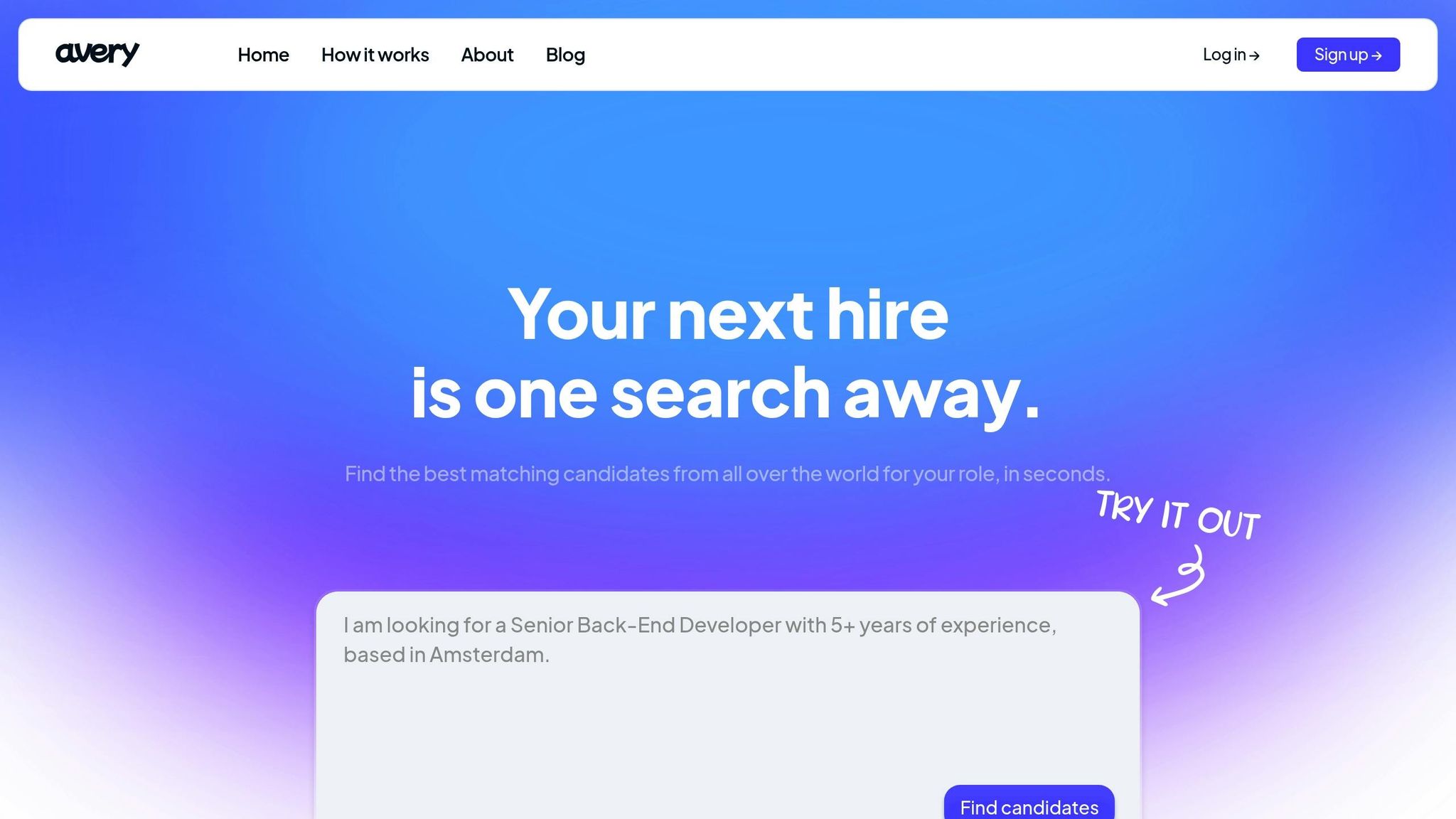
Avery AI, also known as Averi, takes personalization to a whole new level by going beyond simple location tracking. Using its Synapse architecture and AGM-2 technology, the platform processes real-time location signals, historical trends, and even external factors like weather and traffic. This allows for customer experiences that are dynamically tailored to specific locations.
Geographic Targeting Capabilities
Averi stands out with its ability to create micro-segments based on intricate location patterns and behaviors. Instead of focusing on broad areas, it pinpoints highly specific audiences - like professionals visiting coffee shops on Tuesday mornings. Through advanced geofencing and beacon technologies, it enables precise, location-based interactions and timely promotions. Its adaptive reasoning tailors the depth of processing to the complexity of each task. When local expertise is needed, Averi taps into insights from a network of over 2,500 marketing specialists through its Human Cortex Integration system.
Real-Time Data and Analytics
Averi leverages predictive analytics to anticipate customer needs based on their location habits. This means businesses can deliver targeted messages even before customers realize what they might want. The results speak for themselves: brands have reported a 22% increase in campaign performance, 40% growth in revenue, a 20% boost in customer loyalty, and a 15% improvement in retention rates. These real-time insights make it easier for businesses to scale efficiently, regardless of their size.
Scalability for Businesses of Different Sizes
With its precise data and insights, Averi can handle entire campaigns from start to finish, ensuring that brand voice and campaign history remain consistent for long-term personalization. The platform acts as an all-in-one AI workspace, offering both strategic advice and execution support. While AI takes the lead, businesses can choose to incorporate human input when necessary. Pricing ranges from $45 to over $200 per month, making it a viable option for businesses of all sizes.
7. IP-Based Targeting Tools
IP-based targeting tools use IP addresses to connect online activity with physical locations, such as cities, states, postal codes, and countries. This approach bridges digital behavior with real-world locations. These tools are highly effective, with IP geolocation determining the correct country nearly 99% of the time and achieving 80–90% accuracy at the city level.
Geographic Targeting Capabilities
These tools are particularly skilled at identifying where website visitors are located. With Wi-Fi or mobile data, the accuracy can reach down to specific buildings or even street-level details, thanks to unique identifiers from access points and cell towers. For example, MaxMind's GeoIP City Database delivers 80% accuracy at the state level and 68% at the city level. This level of precision allows businesses to display local currencies, offer region-specific promotions, or deliver tailored content based on visitor locations. Additionally, IP-based targeting enables geoblocking to comply with regulations in industries like online gambling or streaming services with restricted broadcasting rights. This precise geographic data not only enhances marketing efforts but also integrates seamlessly with digital platforms.
Integration with Other Tools or Platforms
Modern IP-based targeting tools work effortlessly with platforms like Shopify, Wix, and Webflow, often needing just a single line of code for setup. Many of these tools also provide APIs that link geographic data to marketing stacks and CRM systems, combining location information with customer behavior insights. Advertising platforms such as Google Ads, Facebook Ads, and Microsoft Advertising already include IP-targeting features, making it easy to use them without additional software. Exporting this data to social platforms like Meta, TikTok, and Snapchat enables localized campaigns tailored to specific audiences.
Real-Time Data and Analytics
These tools also offer real-time reporting, giving businesses the ability to monitor campaigns and track visitor activity as it happens. This instant feedback allows for quick adjustments to campaigns, ensuring optimal performance. For high-traffic businesses, hosting GeoIP databases locally can reduce network delays and cut down on per-query costs. Combining IP-based data with demographic and interest-based insights can improve campaign performance by as much as 50%.
Scalability for Businesses of Different Sizes
Whether you're running a small business or a large enterprise, IP-based targeting tools can scale to meet your needs. Smaller businesses can start with affordable plans, such as Geo Targetly's $9/month option, which includes a 14-day free trial. For larger enterprises managing millions of transactions, MaxMind offers more advanced databases, with country-level data starting at $31.16/month and city-level data available for $122.83/month. These tools are versatile across industries - e-commerce sites use them for currency localization, retail businesses to drive in-store visits, media companies for managing licensing, and financial institutions for fraud prevention. You can refine your targeting from broad regional areas to a specific radius around your storefront, ensuring your marketing budget focuses on the most promising geographic segments.
Tool Comparison Table
Choosing the right geographic segmentation tool depends on your budget, technical requirements, and business size. Below is a comparison of seven tools highlighting their pricing, features, integration options, and ideal use cases.
Pricing:
Options range from free tools like Google Analytics and Facebook Audience Insights to subscription-based services such as Segment (starting free and scaling up to $120/month) and IP-based targeting tools (starting around $9/month, often with trial options). Custom pricing applies to tools like HubSpot, QuestionPro, and Avery AI.
Geographic Targeting Capabilities:
- Google Analytics provides basic reporting by country, state, and city.
- Facebook Audience Insights focuses on demographic and interest-based targeting.
- HubSpot incorporates mapping for managing territories and leads.
- QuestionPro uses survey data to deliver regional insights.
- Segment routes location data to various marketing platforms.
- Avery AI leverages AI for advanced location intelligence.
- IP-based targeting tools offer real-time visitor identification and location tracking.
Integration Options:
- Google Analytics and Facebook Audience Insights work seamlessly within their respective ecosystems.
- HubSpot integrates with major CRMs and mapping tools.
- Segment connects with over 300 marketing tools.
- IP-based targeting tools are compatible with platforms like Shopify, Wix, and advertising platforms.
Recommended Business Sizes:
- Small businesses can maximize value with free tools like Google Analytics or low-cost IP-based targeting options.
- Mid-sized companies may find tools like HubSpot and Segment more suitable.
- Large enterprises or data-driven organizations might prefer Avery AI for its AI-driven insights.
- E-commerce businesses often benefit from IP-based targeting tools for real-time location tracking.
| Tool | Starting Price | Key Geographic Feature | Primary Integration | Best For |
|---|---|---|---|---|
| Google Analytics | Free | Country, state, city reporting | Google ecosystem | All business sizes |
| Facebook Audience Insights | Free (ad spend required) | Demographic & interest targeting | Facebook/Instagram Ads | Local & global brands |
| HubSpot | Varies by plan | Territory management & lead mapping | Major CRMs and mapping platforms | Sales-driven organizations |
| QuestionPro Research Suite | Quote-based | Survey-based geographic data | Survey platforms | Market researchers |
| Segment | Free to ~$120/month | Customer data routing | 300+ marketing tools | Tech-savvy companies |
| Avery AI | Quote-based | AI-powered location intelligence | Custom APIs | Data-driven enterprises |
| IP-Based Targeting | ~$9/month (Geo Targetly) | Real-time visitor location | Shopify, Wix, ad platforms | E-commerce & global sites |
Conclusion
Geographic segmentation tools offer three big wins for businesses: tighter budget control by focusing on high-potential regions, better conversion rates through localized messaging, and actionable insights for smarter site selection and market expansion. Pairing behavioral and geographic data can supercharge campaign performance by up to 50% and improve retail behavior prediction accuracy by 17%. These perks make choosing the right tool a game-changer for your business.
Start by defining your goals to pick the right geographic segmentation tool. If your focus is personalized website content, look into IP-based targeting tools. For businesses needing detailed spatial analysis, platforms like HubSpot or Segment, which integrate easily with CRM systems, are worth considering. Matching the tool to your advertising, personalization, or market research needs ensures you’re set up for success.
Budget and scale matter, too. Free tools can work well for small businesses, while subscription-based models are better suited for companies looking to grow.
"By regularly updating your segments, you can ensure sustained growth and scalability for your business".
Take advantage of free trials to test data accuracy and integration features. Tools with user-friendly interfaces can also help lower training costs and speed up adoption.
The key is starting with a tool that addresses your immediate needs, whether it’s sharper ad targeting, more personalized web content, or deeper market insights. The right tools make geographic segmentation easier, turning generic campaigns into region-focused strategies that deliver real, measurable results.
FAQs
What’s the best geographic segmentation tool for my business?
When it comes to geographic segmentation tools, the best choice will depend on your business's size, objectives, and budget. If you're running a small or local business, look for tools that offer straightforward geographic targeting features. These tools are typically easy to use, budget-friendly, and perfect for reaching nearby customers without needing advanced technical skills.
On the other hand, larger businesses or those requiring more detailed insights might benefit from advanced platforms like GIS software. These tools provide deeper geographic and demographic analysis, helping you evaluate market potential, spot underserved areas, and understand customer behavior across different regions. However, they often come with a higher price tag and may require specialized expertise to use effectively.
The key is to pick a tool that matches your business goals - whether you’re focusing on simple local targeting or diving into complex data analysis for strategic decision-making.
How can integrating geographic segmentation tools with marketing platforms benefit my business?
Integrating geographic segmentation tools into your marketing platforms can take your campaigns to the next level. By leveraging location-based data, you can send targeted, relevant messages that resonate with your audience. This approach allows you to craft localized campaigns tailored to specific regions, whether you're promoting seasonal deals or region-specific products. The result? Higher engagement and better conversion rates.
These tools also unlock valuable insights into regional buying habits and preferences, enabling you to fine-tune your strategies for different markets. This means smarter resource allocation, improved profitability, and a clear path to sustainable growth. Plus, they make it easier to build detailed customer profiles and segmentation maps, allowing for precise targeting and real-time adjustments to your campaigns. In short, this integration not only enhances customer engagement but also maximizes your ROI.
How does geographic segmentation make marketing campaigns more effective?
Geographic segmentation takes marketing to the next level by enabling businesses to zero in on specific regions and craft messages that resonate with the local audience. Think about it: promoting winter jackets in snowy regions or aligning products with local trends makes campaigns feel more relevant and personal.
With tools like advanced mapping and analytics, businesses can pinpoint areas with high potential or identify underserved markets. This approach helps companies allocate their resources wisely, connect with the right audience, and boost conversion rates. In short, geographic segmentation allows brands to create tailored campaigns that not only perform better but also build stronger customer relationships.