Social proof is a psychological concept where people rely on others' actions to guide their decisions. This principle is central to influencer marketing, where visible metrics like likes, comments, and follower counts act as endorsements. Here's what you need to know:
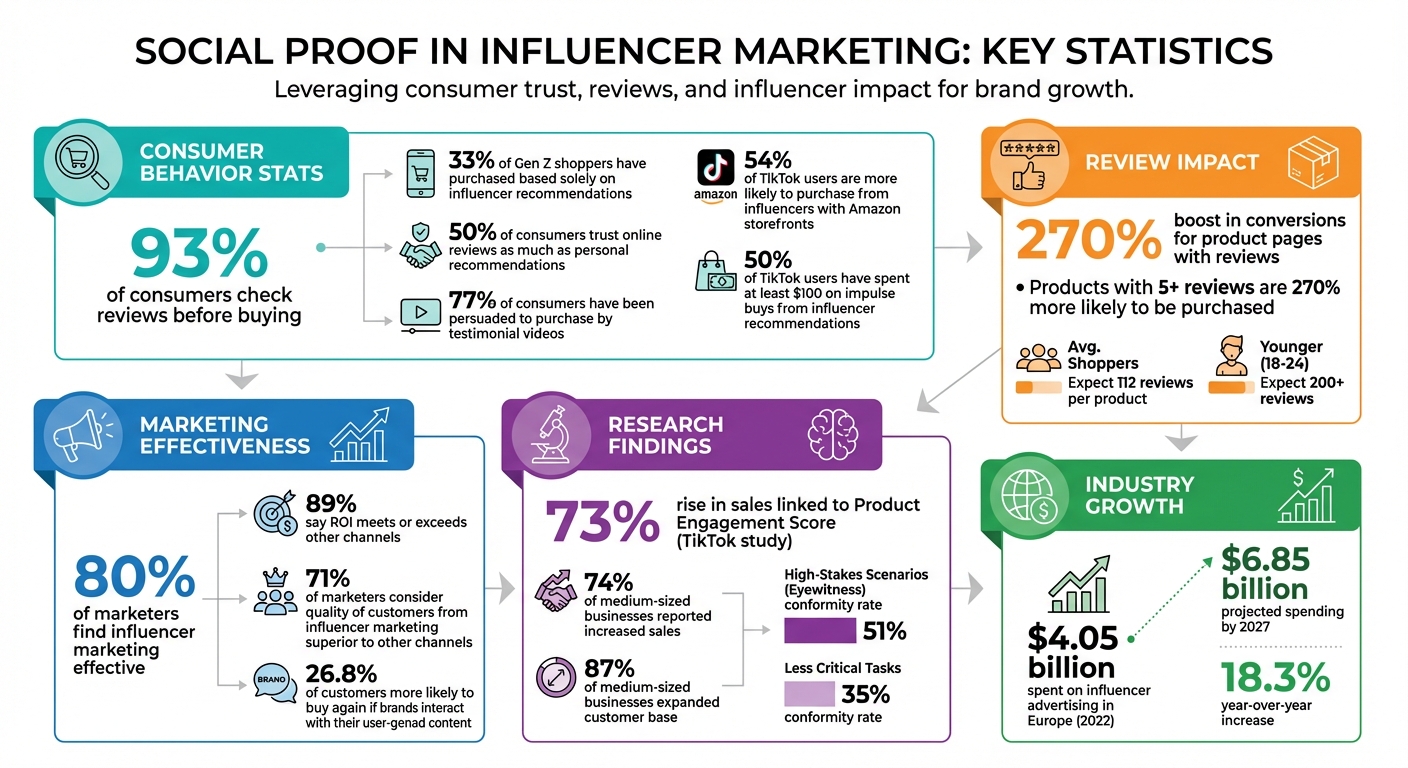
- Why it works: People trust others' opinions, especially in uncertain situations. For instance, 93% of consumers check reviews before buying.
- Key stats: Gen Z shoppers are 33% more likely to buy based on influencer recommendations. Product pages with reviews see a 270% boost in conversions.
- Micro-influencers' role: Relatability often makes smaller influencers more effective than celebrities.
- Neuroscience factor: Aligning with group opinions activates the brain's reward center, making decisions feel satisfying.
Brands use tactics like testimonials, whitelisting, and parasocial relationships to build trust and drive sales. Authenticity is crucial - users are quick to spot fake endorsements. Tools like GRIN, Trustpilot, and TagTray help integrate social proof into marketing strategies effectively.
Social Proof Statistics in Influencer Marketing: Key Data and Consumer Behavior Metrics
The Psychology Behind Social Proof
Cialdini's Influence Principles and Social Proof
Robert Cialdini, a renowned Professor Emeritus of Psychology and Marketing at Arizona State University, identified social proof as one of his seven core principles of influence. The others include reciprocity, commitment/consistency, authority, liking, scarcity, and unity. His work highlights how people are more likely to view a behavior as correct when they see others doing it. This mental shortcut, refined over thousands of years, helped our ancestors make safer decisions by observing the group.
When we're uncertain, we naturally look for guidance from those around us. Interestingly, cues from people who share our characteristics - like age, interests, or values - tend to carry even more weight. This is why micro-influencers, who feel more relatable than celebrities, often have a stronger impact. These principles aren’t just theoretical; research consistently supports the idea that social proof plays a powerful role in shaping decisions and behaviors.
Research Studies on Social Proof
Several studies provide compelling evidence for the power of social proof. One classic example is Solomon Asch's conformity experiments. In these studies, participants were asked to match line lengths - a task with an obvious answer. Yet, 75% of participants conformed to the group's incorrect consensus at least once. The effect becomes even stronger in high-stakes situations. For instance, in eyewitness identification scenarios, conformity rates climbed to 51%, compared to 35% for less critical tasks.
Muzafer Sherif's autokinetic effect studies add another layer of understanding. When faced with ambiguous situations, participants didn’t just publicly agree with the group - they internalized the group’s judgment as their own. This concept of "private acceptance" is especially relevant in modern contexts like influencer marketing. A product endorsed by thousands of likes or positive comments can genuinely persuade consumers that it’s worth their attention.
Brain Science of Social Proof
Neuroscience offers fascinating insights into why social proof is so effective. Functional MRI (fMRI) studies reveal that conforming to group opinions triggers the striatum, the brain’s reward center, creating a sense of satisfaction. On the flip side, going against the group activates the anterior cingulate cortex, which processes conflict and psychological discomfort.
When we’re unsure, we instinctively trust the wisdom of the crowd. This isn’t just about avoiding social rejection. The brain’s reward system actually reinforces the pleasure of aligning with others. That’s why high engagement metrics - like thousands of likes or shares - do more than signal popularity. They create a genuine sense of enjoyment that draws people in and motivates them to participate.
sbb-itb-a84ebc4
How Social Proof Works in Influencer Marketing
Influencer Endorsements as Social Proof
Influencer endorsements tap into our natural psychological tendencies, particularly the brain's reward response to aligning with a group. These endorsements combine two key types of influence: informational (learning from others) and normative (conforming to fit in). Together, they reduce hesitation and spark a desire to belong.
The stats reinforce this. About 33% of Gen Z shoppers have purchased a product solely because an influencer recommended it. And half of all consumers trust online reviews just as much as personal advice from friends or family. This isn’t just about the allure of fame - it’s about creating a mental shortcut that makes decisions feel safer.
Brands are finding clever ways to use this kind of social proof. For instance, in 2025, Charlotte Tilbury featured testimonials from micro-influencers - professional makeup artists - right on their website. They even linked to these influencers' social media profiles, which boosted both the brand’s credibility and the artists’ exposure. Similarly, Brooklinen added a "Brooklinen in the Wild" section on their product pages, showcasing Instagram posts from influencers alongside regular customer reviews. This blended approach added a layer of trusted, high-profile validation.
Another effective tactic is whitelisting, where brands run paid ads using influencers’ accounts. This makes the promotion feel more like an organic recommendation rather than a traditional ad, leveraging the trust followers already have in the influencer.
These strategies show how brands can turn psychological principles into marketing wins. But beyond endorsements, the real magic happens with deeper emotional connections, like parasocial relationships.
Parasocial Relationships and Trust
One of the biggest strengths of influencer marketing lies in parasocial relationships. These are one-sided emotional bonds where followers see influencers as relatable friends rather than untouchable celebrities. This connection shrinks the psychological distance, making endorsements feel more like heartfelt advice than scripted advertising.
"That goes back to the idea of humanizing brands because humans don't trust brands, they trust humans."
- James Pardoe, CEO, Grow Digital Services
Parasocial interaction (PSI) - moments when influencers reply to comments, share personal stories, or host live streams - deepens these bonds. A study of Gen Z users on Instagram Reels and TikTok found that PSI significantly influenced purchase intentions, with an indirect effect coefficient of β = 0.24 (p < 0.01).
Brands are leveraging this dynamic in smart ways. For example, Samsung Gulf Electronics incorporated fitness influencer testimonials into email campaigns promoting the Galaxy Ring. By pairing these endorsements with clear calls to action, they used the influencers' personal appeal to boost click-through rates. Similarly, Daniel Wellington collaborated with thousands of Instagram influencers, resulting in over 3.5 million user-generated posts. This strategy created an overwhelming presence that helped the brand rise from obscurity to global recognition.
The key to all of this is authenticity. Research shows that 80% of marketers find influencer marketing effective, with 89% saying the return on investment meets or exceeds other channels. But this success hinges on the relationship feeling real. As GRIN explains:
"For a creator/brand relationship to have any shot at success, consumers need to believe it's the real deal".
When followers sense manipulation or overly commercial motives, the trust - and the social proof - falls apart.
The Power of Social Proof: Why We Trust the Crowd When We Buy
Research Findings on Social Proof in Marketing
Recent studies have shed light on how social proof influences consumer behavior, providing concrete data to back up earlier theories about its psychological effects on sales and purchasing decisions.
TikTok Influencer Impact Study
Between May and November 2019, researchers Jeremy Yang (Harvard Business School), Juanjuan Zhang (MIT Sloan), and Yuhan Zhang (Harbin Institute of Technology) conducted a detailed analysis of 16,951 TikTok influencer video ads. They paired this data with corresponding sales figures from Taobao to uncover some fascinating insights. Using 3D convolutional neural networks, they created a "Product Engagement Score" to measure viewer focus on the product itself, rather than just the influencer's entertainment value.
Their findings were eye-opening: traditional metrics like likes, comments, and shares had little correlation with increased sales. Instead, the Product Engagement Score - capturing how much attention was directed at the product - was the key predictor, linked to a 73% rise in sales.
"Influencer video ads are highly engaging but do a poor job of lifting sales... what drives conversion is not engagement per se but effective engagement associated with the advertised product."
- Jeremy Yang, Harvard Business School
The study also introduced the concept of "ineffective engagement", where videos garner millions of views but fail to drive sales because the influencer's personal brand overshadows the product being advertised.
Complementing these insights, a broader meta-analysis provided additional clarity on how influencer credibility and follower size affect consumer behavior.
Meta-Analysis of Campaign Results
A separate analysis involving 880 active TikTok users explored how influencer credibility impacts trust and, in turn, purchase behavior. Using Structural Equation Modeling and Artificial Neural Networks, researchers examined how these factors played out across different campaign types and influencer sizes.
The results highlighted distinct trends. Smaller and medium-sized influencers (under 1 million followers) excelled at fostering engagement through relatable, recommendation-driven content. Meanwhile, larger influencers (over 1 million followers) were more effective at boosting purchase intentions with rational, evidence-based endorsements. For example:
- 74% of medium-sized and 68% of small businesses reported increased sales.
- 87% of medium-sized businesses expanded their customer base.
TikTok itself plays a major role in driving consumer behavior. Over half (54%) of users are more inclined to purchase from influencers with Amazon storefronts. Additionally, 50% of users admitted to spending at least $100 on impulse buys influenced by recommendations. Gen Z, in particular, is highly responsive: they are 34% more likely to buy based on an influencer's suggestion compared to traditional ads and 50% more likely compared to celebrity endorsements.
The financial impact of influencer marketing is enormous. In 2022, European businesses spent approximately $4.05 billion (converted from €3.68 billion) on influencer advertising, an 18.3% increase from the previous year. By 2027, this figure is expected to climb to around $6.85 billion (converted from €6.23 billion).
Adding Social Proof to Marketing Funnels
Using social proof effectively throughout the marketing funnel turns abstract ideas into concrete results. By weaving it into each stage, businesses can strengthen trust and guide customers toward making decisions.
At the top of the funnel, where the goal is to build awareness, whitelisting plays a key role. This tactic allows brands to run ads from influencer profiles, making them appear more organic and authentic, which helps attract audiences unfamiliar with the brand. Social media milestones, such as reaching 10,000+ followers, also help establish credibility early on. Moving to the middle of the funnel, detailed product reviews and unboxing videos address potential buyer doubts and provide clarity. Finally, at the bottom of the funnel, influencer testimonials embedded on product pages or during checkout can be the final push that convinces buyers. In fact, 77% of consumers report that testimonial videos have persuaded them to purchase a product.
The data supports this approach. On average, digital shoppers expect 112 reviews per product before making a purchase, with younger consumers (ages 18–24) often looking for more than 200 reviews. Products with at least five reviews are 270% more likely to be purchased than those without reviews. Even after the sale, social proof remains influential - 26.8% of customers are more likely to buy again if a brand interacts with their user-generated content. These strategies ensure that social proof drives growth at every step of the customer journey.
Using Tools from Marketing Funnels Directory
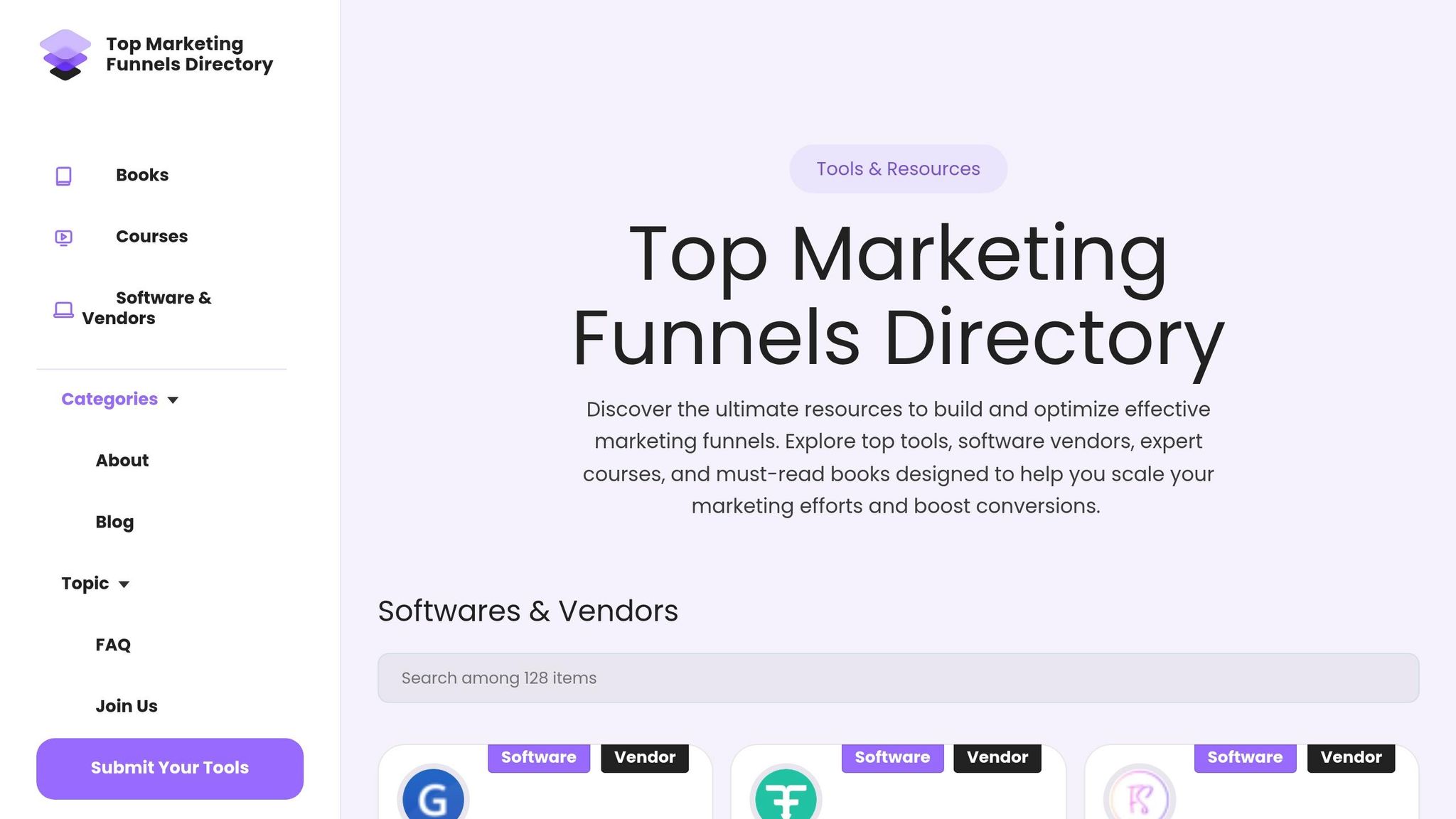
To bring these strategies to life, marketers can rely on tools designed specifically for social proof integration. The Marketing Funnels Directory offers a range of solutions tailored to each stage of the funnel.
For finding and evaluating influencers, platforms like Heepsy help brands analyze engagement rates and audience demographics to ensure the right fit. GRIN acts as a creator management platform, tracking performance metrics, managing whitelisting campaigns, and calculating Earned Media Value (EMV) to measure the impact of organic mentions.
Real-time feedback is essential for gauging trust. Tools like Zigpoll collect audience sentiment through polls and surveys, helping brands assess the credibility of influencers or products. To embed social proof directly into e-commerce sites, TagTray integrates influencer photos and social media content onto Shopify product pages, turning them into shoppable experiences. Trustpilot showcases verified customer ratings, while Hotjar uses heatmaps to reveal whether visitors engage with reviews before making a purchase. Finally, Google Analytics ties everything together by tracking how social proof elements affect conversion rates, session durations, and bounce rates.
With these tools, brands can turn psychological insights into measurable improvements. It’s no wonder that 71% of marketers already consider the quality of customers and traffic from influencer marketing superior to other channels.
Conclusion
Social proof taps into a basic human instinct: when we're unsure, we look to others for guidance. This is why 93% of consumers read reviews before making decisions and why pages filled with reviews see a 270% boost in conversions. As Robert Cialdini famously said:
"We view a behavior as more correct in a given situation to the degree that we see others performing it."
At its core, social proof works because it builds trust, especially when it comes from people we relate to. Influencers, for instance, create bonds with their audiences that feel personal - almost like friendships. A recommendation from someone you trust often carries more weight than any corporate ad ever could.
To make the most of social proof, it’s essential to weave it into every stage of the marketing funnel. From initial awareness to the final checkout, placing reviews and testimonials at critical moments helps smooth the decision-making process. Tools from the Marketing Funnels Directory make it easier to embed these strategies, ensuring that trust is reinforced at every step. This approach not only reduces hesitation but also strengthens consumer confidence.
The secret ingredient? Authenticity. Modern consumers are quick to spot fake reviews or overly polished endorsements. As James Pardoe, CEO of Grow Digital Services, puts it:
"Humans don't trust brands, they trust humans."
Brands that prioritize honesty and real connections are the ones that turn social proof into a true advantage.
FAQs
Do likes and comments actually predict sales?
Likes and comments often serve as forms of social proof, shaping consumer trust and behavior. They can act as signals of credibility and engagement, influencing how people perceive a brand or product. However, while these metrics might help build trust, they don’t necessarily translate into actual sales. Their impact on sales performance ultimately depends on how consumers interpret their significance.
Why do micro-influencers often outperform celebrities?
Micro-influencers tend to outshine celebrities because they come across as more relatable and trustworthy. This sense of connection often translates into better engagement and credibility, especially with younger groups like Gen Z. Their smaller, more focused audiences allow for stronger bonds, making their endorsements feel personal and impactful.
How can brands add social proof at each funnel stage?
Brands can weave social proof into every stage of the customer journey to guide decisions and build trust.
At the awareness stage, leverage tools like influencer endorsements, media shoutouts, and user-generated content to establish credibility and attract attention.
During the consideration phase, focus on showcasing customer reviews, case studies, and expert recommendations. These help potential buyers feel confident about their choices.
At the decision point, use verified purchase badges and trust seals to ease any last-minute doubts and encourage action.
Finally, in the post-purchase stage, foster loyalty by sharing success stories, engaging customers in your community, and offering rewards programs to keep them coming back.