Seasonal content planning helps B2B marketers align their campaigns with key decision-making periods like fiscal year-end cycles, industry events, and budget planning. The goal? To create content that resonates with buyers when they’re actively seeking solutions, shortening sales cycles and boosting engagement. Here’s a quick overview:
- Timing matters: Publish content 6–8 weeks before peak seasons like Q4 or January to match buyer intent.
- Balance content: Use 75% evergreen content and 25% seasonal content to stay relevant year-round.
- Leverage events: industry conferences and trade shows are prime opportunities for outreach, often managed through tools like Buffer.
- Track behavior: Monitor buyer trends, such as increased weekend activity or spikes in search terms, to refine your strategy.
- Use data: Analyze past performance, competitor activity, and search trends to predict demand.
Planning and Scheduling Blog Content for Business Growth
sbb-itb-a84ebc4
Finding the Right Seasons and Events for Your B2B Campaign
Unlike consumer-focused campaigns, B2B seasonality revolves around fiscal year-end cycles, quarterly budgets, and regulatory deadlines rather than traditional holidays or shopping seasons.
To get started, map out both macro-seasons (like Q1–Q4 fiscal periods) and micro-moments (such as major trade shows or industry-specific events). For instance, SaaS companies often experience their busiest periods in Q3–Q4 and January, while professional services firms tend to see demand spike in Q4. By understanding these cycles, you can better align your outreach with when decision-makers are actively evaluating solutions.
Analyzing Seasonal Trends in Your Industry
To identify seasonal patterns, combine public trend data with your internal analytics. Tools like Google Trends can reveal when search interest in your core topics is highest. Narrow your focus by filtering results by geography and date range to account for regional differences. Then, cross-check these findings with your CRM data to spot recurring clusters of leads or deals during specific times of the year.
Keep an eye on your competitors as well. Platforms like Semrush or Ahrefs can help you monitor when competitors increase their paid search campaigns or release more content, which can signal heightened market demand. For example, if you notice several competitors publishing whitepapers around the same time, it could indicate that buyers are actively researching solutions. Brands that incorporate predictive analytics to forecast seasonal demand have reported a 28% boost in campaign ROI compared to those relying only on historical trends.
Don’t overlook external factors that can influence demand. For example, new regulations often drive spikes in demand - think GDPR compliance services or tools for environmental reporting when legislation changes. Other external influences, like weather patterns, school schedules, or government fiscal calendars, can also shape when B2B buyers are most likely to engage with new vendors.
Using Industry Events and Conferences
Industry events are another excellent way to anchor your seasonal campaigns. Trade shows and conferences provide natural opportunities to connect with your audience. In fact, 84% of professionals attending events believe in-person gatherings are critical for building meaningful business relationships. These events bring together decision-makers - like CMOs, CTOs, and procurement leaders - who have the authority to make purchasing decisions.
Timing matters here. Events held in Q3 or early Q4 are especially effective, as they often coincide with budget planning for the following year. Since 80% of B2B sales require at least five follow-ups after an initial meeting, it’s important to schedule content strategically - before, during, and after the event - to maintain engagement.
Plan your event calendar 6–9 months in advance. This gives you enough time to prepare content, submit speaker proposals, and reserve booth space. A single event can yield a wealth of content, such as LinkedIn posts, video snippets, case studies, and follow-up emails. By leveraging this material, you can extend the impact of a short event into a content theme that keeps your brand top of mind throughout the sales cycle.
For tools and strategies to align your content with your broader marketing funnel, check out the Marketing Funnels Directory.
Understanding How B2B Audiences Behave During Different Seasons
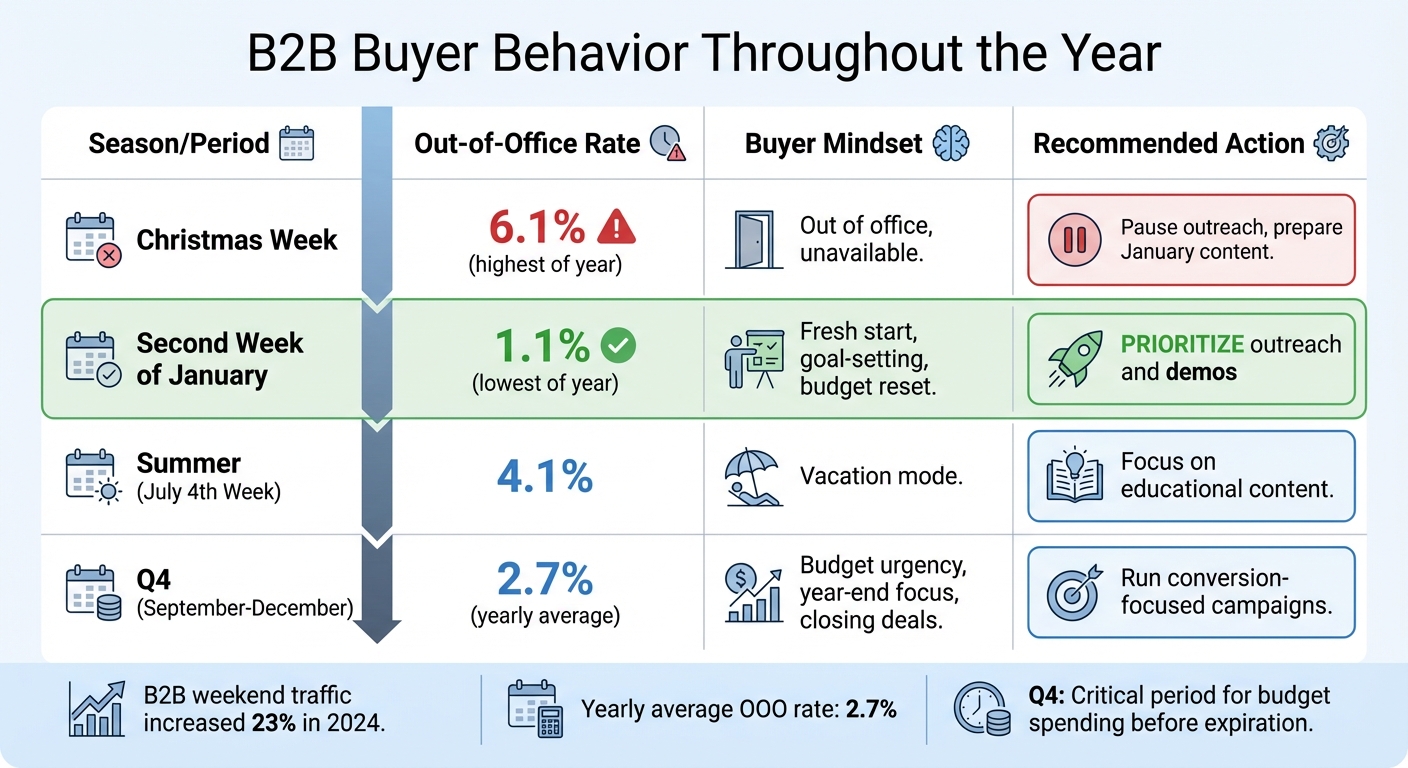
B2B Buyer Behavior and Optimal Outreach Timing by Season
B2B buyer behavior isn’t static - it shifts throughout the year, influenced by fiscal calendars, budget cycles, and even vacation schedules. Getting a handle on these patterns can help you time your outreach when decision-makers are most likely to engage.
The end of the year stands out as a crucial period. In Q4, B2B buyers are often focused on closing deals and meeting revenue goals, with many companies rushing to spend budgets before they expire. During the holiday season, decision-makers tend to adopt a more relaxed mindset, making it an ideal time to discuss long-term strategies rather than immediate needs. This creates opportunities to set the stage for January conversions.
Interestingly, B2B weekend traffic jumped by 23% in 2024, with longer browsing sessions and higher conversion rates on Saturdays and Sundays. Many buyers use personal time to research solutions, complete forms, and download resources without workplace interruptions. To capitalize on this, ensure your transactional pages and gated content are optimized for weekend activity. Incorporating these trends into your outreach schedule can help you connect with buyers when they’re most engaged.
Understanding these seasonal rhythms is just the first step. Tracking real-time buyer intent is where the magic happens.
Tracking Buyer Intent and Decision Cycles
Timing is everything when it comes to B2B campaigns. Search data often reveals clear seasonal spikes. For instance, searches for terms like "Best CRM solutions" or "budgeting tools" tend to rise when companies start planning for the next fiscal year. These spikes align closely with budget cycles.
Out-of-office (OOO) rates also provide valuable clues about buyer availability. On average, the yearly OOO reply rate for B2B emails is 2.7%, but this number fluctuates dramatically depending on the time of year. During Christmas week, OOO rates soar to 6.1%, making outreach efforts almost futile. However, by the second week of January, OOO rates drop to just 1.1% - the lowest point of the year. As Kelly Lindenau from Demand Gen Report explains:
"The drastic change in OOO reply rates around the holidays is likely driven by personal and professional rhythms... Once the new year hits, there's a collective shift in focus - people return to work, eager to catch up on tasks, set new goals and get a fresh start."
This makes the second week of January an ideal time for outreach. Buyers are back at work, budgets are reset, and they’re actively searching for solutions to meet their new goals. Summer presents a different challenge, with OOO rates averaging 3.0% and peaking at 4.1% during the week of July 4th, making it a tricky time for outreach.
| Season | OOO Reply Rate | Buyer Mindset | Best Use |
|---|---|---|---|
| Christmas Week | 6.1% | Out of office, unavailable | Pause outreach, prep January content |
| Second Week of January | 1.1% | Fresh start, goal-setting | Prioritize outreach and demos |
| Summer (July 4th Week) | 4.1% | Vacation mode | Focus on educational content |
| Q4 (Sept-Dec) | 2.7% average | Budget urgency, year-end focus | Run conversion-focused campaigns |
Different industries also have their own seasonal rhythms. SaaS companies often see surges in Q3, Q4, and January, while professional services firms experience their busiest times in Q4. Meanwhile, healthcare and wellness industries see spikes in January, driven by New Year’s resolutions, with another peak in September during back-to-school season.
Now, let’s dive into how historical data can sharpen your seasonal strategy.
Using Data from Past Campaigns
Your CRM is a treasure trove of insights for seasonal planning. By analyzing past performance, you can uncover patterns, such as when leads are most likely to convert, which months bring in the most qualified prospects, and how sales cycles vary across different quarters. This data can help you identify your company’s "lag time" - the typical gap between initial buyer interest and final purchase.
Combine internal data with external tools for a fuller picture. Platforms like Google Trends and Google Search Console can reveal when search interest spikes for your key topics. For example, if searches for your product category tend to surge in September, you should start publishing awareness content as early as June or July to stay ahead.
Competitor intelligence tools like SEMrush, Ahrefs, and SpyFu can also be invaluable. They show when your competitors ramp up their ad spend or content efforts, often signaling a period of increased buyer activity. Social listening tools such as Brandwatch and Sprout Social can help you spot emerging trends 2–4 weeks before they peak, giving you a competitive edge.
Brands that use predictive analytics to forecast seasonal demand have reported a 28% increase in campaign ROI compared to those relying solely on historical data. By combining insights from your CRM, search trends, competitor activity, and social signals, you can create a complete picture of when your audience is ready to engage.
For more tips on aligning seasonal insights with effective funnel strategies, check out the Marketing Funnels Directory.
Creating a Seasonal Content Calendar
With buyer insights in hand, a content calendar transforms strategy into action. It’s not just about scheduling posts - it’s about creating a cohesive plan that aligns with your insights and goals. By identifying key seasons and buyer behaviors, a calendar ensures your efforts are consistent and campaigns are well-coordinated.
Start by defining your team's limits. How much time do your subject matter experts have? What’s the turnaround time for your design team? How long does the approval process take? Knowing these details upfront helps you avoid creating a calendar you can’t realistically execute. As Scotty Smith from CycleWerx Marketing puts it:
"A content calendar is a leadership tool, not just a publishing schedule... It turns scattered activity into coordinated, repeatable execution."
For B2B marketing, a good calendar typically covers 4–8 weeks in detail while outlining themes for the next 1–2 quarters. This approach gives you enough foresight to plan campaigns while staying flexible for unexpected opportunities. Since 72% of top marketers use a mix of seasonal and evergreen content, your calendar should balance these two types seamlessly.
Organizing Seasonal Themes and Content Ideas
Seasonal planning works best when you differentiate between predictable macro-seasons, like trade shows or fiscal deadlines, and micro-seasons, which are driven by short-term trends. In fact, 64% of brands in 2026 monitored micro-trends weekly to seize these fleeting opportunities.
Structure your content around topic clusters instead of standalone keywords. For example, create a pillar page on "Q4 Budget Planning for B2B Teams", then develop related pieces like "How to Justify Marketing Software Spend" or "Budget Template for SaaS Tools." This method not only builds topical authority for search engines but also positions you well for AI-driven search tools.
Make sure every piece of content aligns with the buyer’s journey. Your calendar should include:
- Awareness content: Blog posts, guides
- Consideration content: Case studies, webinars
- Decision content: Pricing guides, demo videos
B2B companies that map their content to the buyer’s journey often see as much as a 40% boost in marketing-qualified leads within a year.
Repurposing should be part of your plan from the beginning. For instance, if you’re hosting a webinar during January’s budget season, plan to repurpose it into a blog post, social media snippets, and an email campaign. This strategy helps you stretch the value of every campaign and improves ROI by 40% compared to single-format approaches.
To maintain balance, color-code your calendar. Use different colors for seasonal and evergreen content to quickly identify gaps and ensure you’re not overloading one type.
Once your ideas are organized, set clear timelines to ensure your content is ready to engage your audience early and rank well in search results.
Scheduling Content Around Important Dates
Timing is everything when it comes to seasonal content. Plan to publish 6–8 weeks before the peak period to give search engines enough time to index your pages. For instance, if you’re focusing on Q4 budget planning, start publishing content in early September instead of waiting until November.
Work backward from key dates. For a September industry conference, for example, your visuals should be finalized by mid-July, content drafts completed by early August, and promotion should kick off 4–6 weeks before the event.
Spotting trends early can make a huge difference. Publishing content when a trend’s search volume is just 15% of its peak can lead to 300–400% higher engagement compared to reactive content published later. Tools like Google Trends can help you identify these early signals.
Assign clear ownership for every calendar item. Each piece should have a primary owner, draft deadline, review period, and publish date. Include details like content title, type, target audience, funnel stage, call-to-action, keywords, and promotion strategy (social, email, paid).
Don’t overlook quieter periods. During holidays or slow seasons, pause aggressive outreach and focus on preparing future campaigns. Instead of letting old seasonal content gather dust, refresh it with updated data or new visuals.
For templates and tools to streamline your content planning, check out the Marketing Funnels Directory, which offers resources tailored for B2B marketers.
Launching and Improving Your Seasonal Campaigns
Once your seasonal content calendar is in place, the next step is launching campaigns that resonate with your audience and fine-tuning them based on real-time data. The platforms you choose should align with where your B2B buyers spend their time and how they make decisions. LinkedIn is a must for professional outreach, while Google Ads and niche industry sites are excellent for capturing high-intent search traffic.
Your website should act as the central hub for these campaigns. Include interactive features like ROI calculators, compliance checklists, and automated scheduling tools to guide buyers toward making decisions. For email campaigns, segment your audience based on their stage in the buyer journey - send industry-specific insights to Marketing Qualified Leads (MQLs) and more targeted content, like product comparisons or customer success stories, to Sales Accepted Leads (SALs).
Choosing the Right Marketing Channels
Each stage of the sales funnel calls for specific channels. Social media works well for creating awareness, while email and SMS excel at driving direct conversions. Retargeting ads are key for re-engaging leads who may have dropped off. Timing is critical, too. A staggered rollout often works best:
- Week 1: Start with organic social posts and influencer teasers to create buzz.
- Week 2: Launch paid ads and email campaigns to drive traffic.
- Week 3: Activate all channels for maximum promotion.
- Week 4: Focus on retargeting and nurturing leads through email.
For paid ads, begin campaigns 4–6 weeks before the peak season. Start with lower bids to test creative and gradually increase bids as competition heats up. Keep in mind that Q4 CPMs (cost per thousand impressions) are typically 3–4 times higher than in Q2 due to increased competition. SaaS and tech companies should align campaigns with Q3 and Q4 budget cycles, while healthcare and wellness brands might see better results in January or after the summer.
The secret to success lies in an integrated channel strategy. All your marketing efforts - email, social media, paid ads, and organic content - should work together to tell a unified story, with timing and messaging carefully synchronized. For more resources on building effective marketing funnels, check out the Marketing Funnels Directory.
With your channels set up, the next step is measuring and optimizing campaign performance.
Tracking Campaign Performance
The best campaigns are backed by metrics that matter. For B2B seasonal efforts, focus on MQL to SQL conversion rates, lead velocity, and pipeline velocity to track how quickly interest turns into action. As Big Drop Inc explains:
"B2B teams have to be data-driven and nimble in Q4. Track your best-performing metrics such as MQL to SQL conversion rates, cost per qualified lead, demo conversion rates, and lead velocity by campaign type."
Pay attention to demo sign-ups, webinar registrations, and downloads of gated content like whitepapers or ROI calculators. For email campaigns, monitor open rates, click-through rates, and conversion rates. Seasonal email conversion rates often range from 2.5% to 4.5%.
To see the bigger picture, use multi-touch attribution models. These help you understand how early-season efforts (like influencer content) contribute to later conversions (like retargeting ads). During competitive periods like Q4, adjust your budget daily to focus on top-performing channels and assets. Brands that do this improve their seasonal ROI by 18%.
Dive deeper by analyzing performance by job title or industry to identify which B2B personas respond best to your offers. Compare sales before, during, and after the campaign to pinpoint seasonal impact. This level of detail helps you understand not just what worked, but why it worked for specific groups.
These insights will guide you in refining future seasonal strategies.
Applying Lessons to Future Campaigns
Data only becomes useful when it’s applied. Start by reviewing 2–3 years of historical data to identify patterns in revenue peaks, conversion rates, and traffic surges. This allows you to plan future campaigns with precision instead of relying on guesswork.
Document A/B test results - whether it’s about creative angles, audience segments, or timing - and compile them into a playbook. This ensures you’re not starting from scratch each year. Use "shoulder seasons" (the quieter periods right before a peak) to test ideas. For example, insights from August campaigns can directly inform your strategies for September.
Rather than discarding old seasonal content, update high-performing assets with fresh stats, visuals, and links for the next cycle. Conduct quarterly audits of your evergreen and seasonal content to fix broken links and refresh outdated data. Publishing content when a trend’s search volume is just 15% of its peak can lead to 300–400% better engagement compared to jumping in later.
Analyze competitor campaigns from previous seasons to spot gaps or strategies you can adapt. Gather direct feedback from your audience through surveys after the seasonal peak to complement quantitative data with qualitative insights. Tools like Google Trends can also help you time your campaigns better - if searches for your keywords start in January but bookings peak in March, shift ad spend to the earlier period.
Set clear, measurable goals like "grow social media followers by 15% during the festive season" to make your data actionable. The aim isn’t to achieve perfection right away - it’s to create a system that improves with every seasonal cycle.
Conclusion
Seasonal content planning for B2B campaigns revolves around aligning your content strategy with the timing of buyer decision cycles. By syncing your efforts with fiscal budget periods, industry events, and buyer intent patterns, you can position your campaigns to catch decision-makers at the exact moments they’re evaluating vendors and allocating budgets. This approach has the potential to contribute 30–35% of your annual revenue.
The most successful B2B marketers rely on a mix of strategies - balancing consistent, long-term authority-building with seizing timely opportunities. This dual approach ensures steady traffic while also delivering engagement surges during peak moments. Planning for major seasonal opportunities well in advance is critical, giving teams the time needed for research, creative execution, and seamless coordination across departments. This careful preparation helps establish a well-rounded content strategy.
Data is the backbone of every effective seasonal campaign. By analyzing 2–3 years of historical data and leveraging predictive analytics, you can improve your seasonal campaign ROI by up to 28%. Past campaigns provide valuable insights into when your audience is most likely to convert, which channels are most effective, and the messaging that resonates with specific buyer personas.
In addition to long-term planning, today’s fast-paced environment demands attention to micro-seasonality - fleeting trends and technology updates that require quick action. Spotting these trends early can lead to engagement rates that are 300–400% higher. To stay competitive, your seasonal strategy needs to combine macro-level planning for predictable events with agile processes that allow you to act on emerging opportunities. These data-driven insights enable your team to adapt quickly when new trends surface.
Treat your content calendar as more than just a scheduling tool - it’s a strategic asset that aligns marketing, sales, and product teams around shared revenue goals. When your seasonal content addresses real buyer questions at every stage of the funnel, from awareness to decision-making, it transforms ordinary posts into a powerful engine for driving revenue and building lasting connections with your audience.
FAQs
How do I find my industry’s seasonal buying peaks?
To pinpoint your industry's seasonal buying trends, start by studying market patterns and customer behaviors over time. Tools like Google Trends can be a great resource for tracking keyword interest, giving you insights into when demand spikes. Combine this data with your own analytics, such as CRM data or website traffic reports, to identify clear patterns. Understanding these demand cycles enables you to schedule campaigns at the right time, ensuring they align with your audience's seasonal needs and preferences.
What seasonal content should I create for each funnel stage?
To craft seasonal content for every stage of the marketing funnel, focus on aligning your messaging with what your audience needs at each point:
- Top of the Funnel (Awareness): Create content that grabs attention and builds a connection. Think holiday-themed videos or seasonal blog posts that educate while striking an emotional chord.
- Middle of the Funnel (Consideration): Provide resources that help potential customers weigh their options. Seasonal guides, case studies, or themed webinars can showcase your solutions in a way that feels timely and relevant.
- Bottom of the Funnel (Decision): Encourage conversions with timely offers like holiday discounts, product demos, or comparisons. Tie these to key dates to make them irresistible.
By tailoring your approach, you can make your seasonal content resonate at every stage of the journey.
How do I measure ROI from seasonal B2B campaigns?
To gauge ROI from seasonal B2B campaigns, it's essential to link your marketing activities directly to business results. Start by using attribution models to map out the customer journey - from initial awareness all the way to revenue generation. Focus on tracking key metrics like pipeline velocity, customer lifetime value (LTV), and revenue contribution to get a comprehensive picture of performance.
Set clear, measurable goals at the outset, and make the most of real-time analytics to monitor progress as it happens. Additionally, implement frameworks that assign credit specifically to your seasonal campaigns. This approach helps you better understand their true impact on your bottom line.