Cross-promotional campaigns are partnerships where brands work together to promote each other’s products or services, sharing costs and expanding their reach. The key is finding partners with overlapping, non-competing audiences. These campaigns are highly effective, leveraging trust between brands, boosting visibility, and improving customer retention.
Key Insights:
- Partnerships can drive 27% faster growth and contribute to 28%+ of total revenue.
- Cross-promotions work across all marketing funnel stages, from awareness (social media shoutouts) to conversion (bundled offers).
- Successful examples include:
- Coca-Cola's "Share a Coke": Increased sales by 2% in the U.S. and added $1.8 billion in market value.
- Apple Watch Nike+: Generated $1 billion in accessory sales.
- Watson and Ariadne's campaigns: Achieved up to 143% conversion boosts using AI and data-driven targeting.
- Metrics like customer retention (up to 89%) and revenue increases (23%) highlight the value of these collaborations.
How to Succeed:
- Choose the Right Partner: Look for aligned audiences and shared values.
- Set Clear Goals: Define measurable objectives like sales growth or increased engagement.
- Use Data: Leverage tools like UTM codes and analytics for accurate tracking.
- Start Small: Test partnerships with smaller campaigns before scaling.
Cross-promotions are a cost-effective way to grow, but success depends on collaboration, clear metrics, and the right tools.
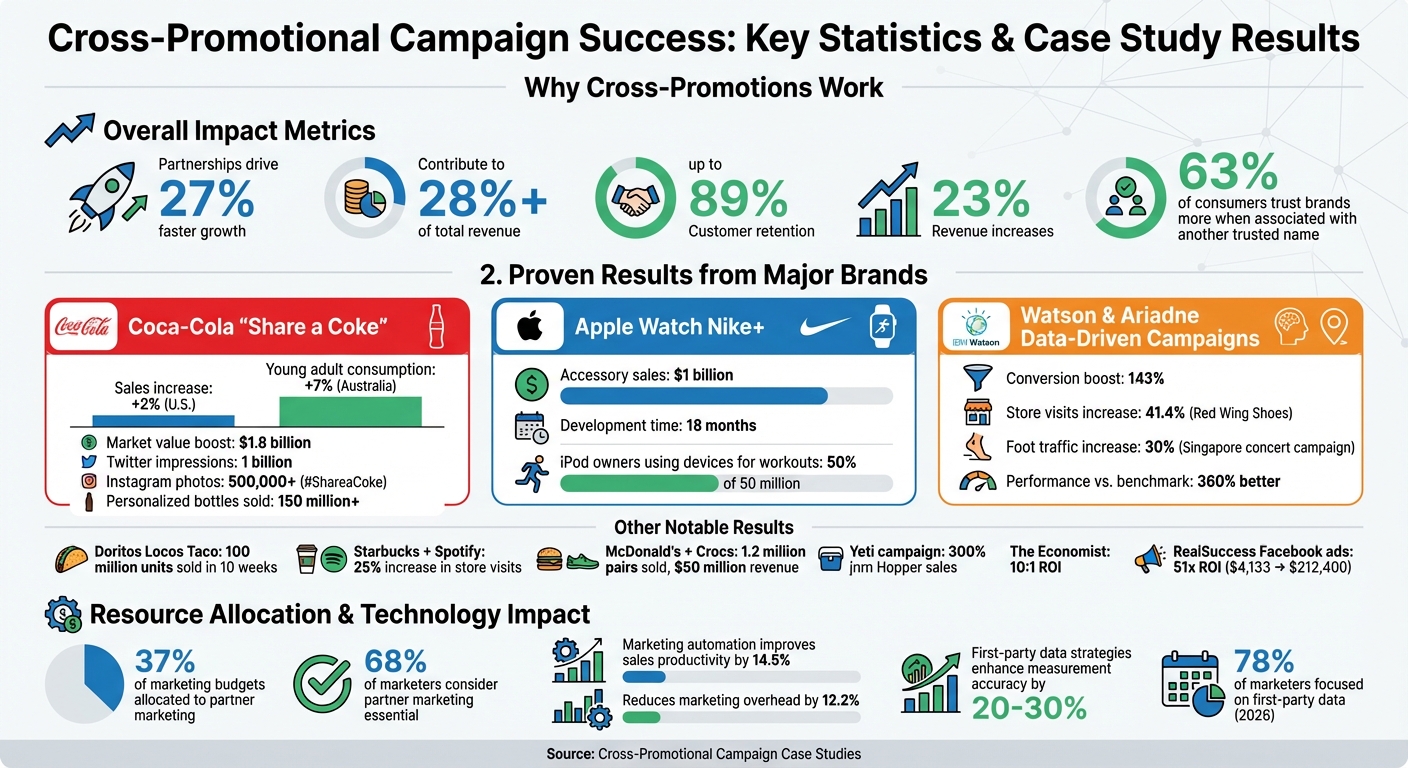
Cross-Promotional Campaign Success Statistics and ROI Metrics
5 Reasons to Consider Cross Promotions | Small Business Marketing
Case Studies: Examples of Successful Campaigns
These case studies highlight the tangible outcomes and strategic approaches behind successful cross-promotional campaigns.
Watson and Ariadne: Data-Driven Sales Growth
In July 2025, Ariadne launched an SMS campaign targeting attendees at a Taylor Swift concert in Singapore. By leveraging location data, they promoted an "Ultra Light Neck Fan" directly to concert-goers via SMS. This precise targeting strategy resulted in a 30% increase in foot traffic to nearby electronics stores.
IBM Watson Advertising also showcased the power of data with its WEATHERfx and JOURNEYfx tools. For example, a campaign for Red Wing Shoes achieved a 41.4% increase in store visits, outperforming the industry benchmark by 360%. Additionally, Watson's Accelerator campaign used AI to optimize creative content, testing 108 variations. This led to a 143% boost in conversions and 990 clicks-to-cart. According to IBM Watson Advertising:
Watson continuously learned which creative elements and products resonated with audiences, delivering a personalized ad to the right user every time.
Coca-Cola's Share a Coke Campaign
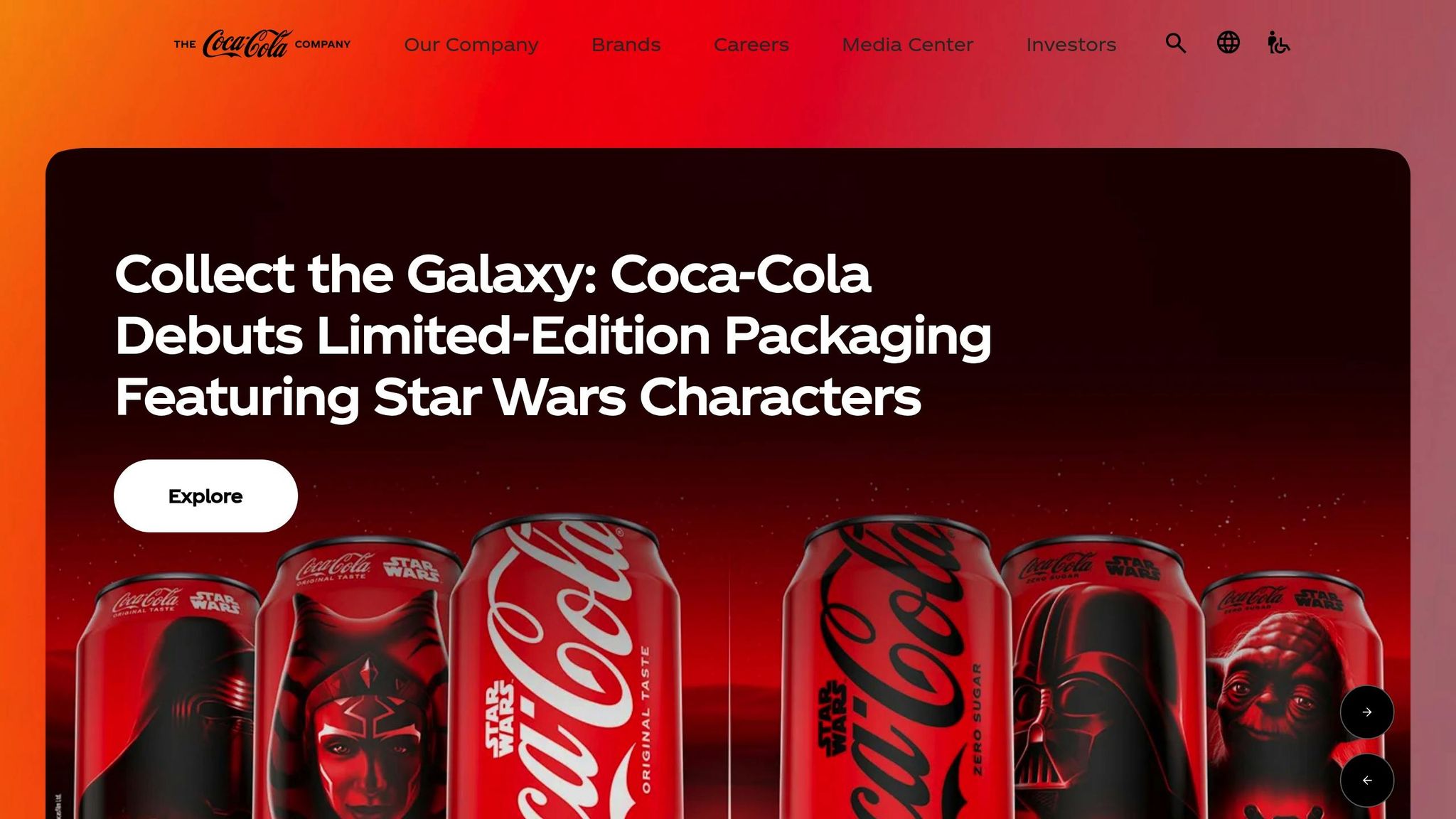
Coca-Cola’s "Share a Coke" campaign, which debuted in Australia in 2011, was a masterclass in personalization. By replacing its iconic logo with 150 popular names, Coca-Cola created a unique connection with consumers. Marketing Director Lucie Austin and Creative Excellence Lead Jeremy Rudge ensured the campaign's success through extensive stakeholder collaboration and trademark checks.
The campaign's on-site kiosks added a hands-on element, allowing customers to print custom names, resulting in 378,000 extra cans produced on-site. The results were striking: young adult consumption in Australia rose by 7%, U.S. sales grew by 2%, and the campaign generated nearly 1 billion Twitter impressions and millions of new Facebook followers. On Instagram, over 500,000 photos were shared using the #ShareaCoke hashtag.
Coca-Cola’s global rollout demonstrated a keen understanding of local preferences. In China, bottles featured family names before given names to align with naming traditions, contributing to the campaign’s success in over 80 countries and the sale of more than 150 million personalized bottles. The campaign also significantly impacted Coca-Cola’s market value, boosting it by $1.8 billion during its peak year.
Apple Watch Nike+: A Co-Branded Product Success
In May 2006, Nike and Apple unveiled the Nike+ iPod Sports Kit, a collaboration that took 18 months to develop. The product integrated an accelerometer sensor into Nike shoes, which wirelessly synced with the iPod nano to track performance data.
The partnership was a financial success. At the time, 50% of the 50 million iPod owners used their devices during workouts, and the launch generated approximately $1 billion in accessory sales.
Mark Parker, Nike’s CEO, described the collaboration:
Nike+ iPod is a partnership between two iconic, global brands with a shared passion for creating meaningful consumer product experiences through design and innovation.
Steve Jobs added:
We're working with Nike to take music and sport to a new level.
Beyond hardware, the collaboration introduced nikeplus.com, a platform for users to sync workout data, track progress, and compete with up to 50 runners globally. This ecosystem fostered long-term consumer engagement and loyalty.
These examples underline how strategic partnerships and data-driven approaches can lead to measurable growth and lasting consumer impact.
Lessons from Successful Cross-Promotions
Common Strategies That Work
The best cross-promotions tap into shared audience interests - brands that cater to the same demographic without directly competing often see the most success. A standout example is the September 2013 collaboration between Android and Nestle. Together, they rebranded 50 million KitKat bars across 19 countries, featuring the Android logo. The campaign included contests where participants could win Google Play gift cards and Nexus tablets, creating buzz and engagement.
Using multiple channels to engage audiences is another winning approach. Take the partnership between Starbucks and Spotify: Starbucks employees received Spotify Premium accounts to curate in-store playlists, which customers could then add to their own Spotify libraries through the mobile app. This initiative not only enhanced customer experience but also drove a 25% increase in Starbucks store visits during the first quarter.
Bundling products in a way that adds value can also deliver impressive results. When Doritos and Taco Bell teamed up to launch the "Doritos Locos Taco" in March 2012, they created a taco shell made from Doritos chips. This unique product resonated so strongly with customers that over 100 million units were sold in just ten weeks.
Measuring Cross-Promotion Results
To gauge the success of cross-promotional efforts, it’s crucial to set clear metrics before launching. For example, calculating Return on Marketing Investment (ROMI) involves the formula: (revenue – expenses) ÷ expenses × 100%.
Tracking tools like unique discount codes and UTM parameters allow brands to directly attribute sales and traffic to specific campaigns. Notably, in 2026, 78% of marketers focused on first-party data strategies, which enhanced measurement accuracy by 20–30%.
For deeper insights, multi-touch attribution models assign credit to various points in the customer journey. A position-based model, for instance, might allocate 40% of the credit to both the first and last interactions, with the remaining 20% distributed among middle touchpoints. Real-time monitoring also plays a key role - automated alerts for spikes in cost-per-acquisition or dips in conversion rates can help marketers make timely adjustments. After the campaign, conducting a joint debrief with your partner to analyze referral traffic, lead quality, and total revenue can provide valuable insights for future collaborations.
Once metrics are established, finding the right partner becomes the next priority.
How to Find the Right Partner for Your Brand
Choosing the right partner starts with a clear understanding of your goals. Look for brands with overlapping audiences but non-competing products. The alignment of brand values is equally important to avoid confusing customers or harming reputations. A prime example is the May 2016 partnership between GoPro and Red Bull. Both brands appeal to adventure-seekers, and their "Stratos" campaign - featuring a record-breaking space jump filmed with GoPro cameras - highlighted their shared focus on extreme experiences and product durability.
Trust between partners is another key factor. Research shows that 63% of consumers are more likely to trust a brand when it’s associated with another trusted name. Tools like SEMrush and SimilarWeb can help evaluate a potential partner’s audience demographics and track their past collaboration successes.
It’s also crucial to ensure both partners bring similar resources to the table. Whether it’s email lists, social media reach, or content creation capabilities, balanced contributions are essential. For example, McDonald’s and Crocs collaborated on a limited-edition shoe line inspired by McDonald’s menu items. The campaign sold 1.2 million pairs and generated $50 million in revenue.
Starting small can be a smart move. Brands with 10,000 to 500,000 followers often have highly engaged audiences, making them ideal partners for initial campaigns. No matter the size of the collaboration, formalizing agreements in writing is non-negotiable. Legal contracts should clearly outline each partner’s roles, responsibilities, and financial commitments.
These strategies highlight how thoughtful partnerships and well-defined goals can make cross-promotional campaigns a success.
sbb-itb-a84ebc4
Using Marketing Funnels Directory for Cross-Promotions
The Marketing Funnels Directory serves as a powerful resource for amplifying cross-promotional efforts. It offers tools, partnerships, and learning opportunities to help marketers fine-tune their campaigns and achieve better results.
Tools for Social Media and Ads Funnels
Bringing together data from multiple channels is crucial for effective cross-promotions. The Marketing Funnels Directory provides tools that unify data from social media, email, and ads into comprehensive customer profiles. This approach can lead to a revenue increase of up to 23%.
For managing social media efforts, platforms like Hootsuite handle organic content, while tools such as AdEspresso support A/B testing across various platforms. Additionally, marketing automation tools listed in the directory have been shown to improve sales productivity by 14.5% and reduce marketing overhead by 12.2%.
When it comes to analytics, solutions like Improvado and Google Analytics 4 provide a complete view of ROI and attribution across all partner interactions. These tools save time and streamline reporting. As Shayna Tyler from Signal Theory Inc. shared:
Reports that used to take hours now only take about 30 minutes. We're reporting for significantly more clients, even though it is only being handled by a single person.
Vendor Listings and Partnership Resources
Finding the right partners is key to successful cross-promotions. The Marketing Funnels Directory includes vendor listings that help marketers identify non-competing brands with similar audiences. This allows businesses to align on values and messaging before committing to partnerships.
Competitive intelligence tools like Semrush (starting at $139.95/month) and SpyFu help evaluate potential partners by analyzing their keyword strategies and market presence. SpyFu’s "Kombat" feature even compares audience overlaps, while tools like Klue send updates when partners launch new products or adjust their messaging.
To streamline outreach, lightweight CRMs like Folk (starting at $17.50/user/month) integrate LinkedIn and email contacts, making communication more efficient. For faster contract processing, solutions like Yousign can cut down turnaround times by an average of seven days, helping partnerships get off the ground more quickly.
Courses and Books for Cross-Promotion Skills
Beyond finding partners, honing collaboration skills is essential. HubSpot's "Ultimate Co-Marketing Kit" offers case studies, templates, and expert advice to help marketers define roles and responsibilities early in the process.
For content-driven partnerships, guides on co-authoring e-books can be invaluable. For example, in 2014, The Chat Shop and Live Chat collaborated on an e-book about customer engagement strategies, which boosted their credibility and helped convert leads through shared audiences.
Other resources, like "Growth Hacker Insights: Ultimate Guide to Growth Hacking," delve into unconventional collaboration opportunities. Additionally, certifications from programs like the Criteo Commerce Academy focus on commerce media and cross-channel performance.
With 68% of marketers considering partner marketing essential and 37% of budgets now allocated to these efforts, improving cross-promotion skills can lead to meaningful results.
Conclusion: Driving Success Through Cross-Promotional Campaigns
Main Lessons
Choosing the right partners and relying on data to guide decisions can lead to impressive results in cross-promotional campaigns. Brands with overlapping but complementary audiences often see stellar outcomes. For instance, Yeti's "Map the Gaps" campaign drove a 300% jump in Hopper sales. Similarly, Panera's AR-based campaign achieved a 25% store visit rate.
Consistency across channels also plays a big role in improving engagement. Take The Economist's programmatic strategy as an example - it delivered a 10:1 ROI. Even small-scale investments can bring big returns. The RealSuccess case study showed how $4,133.71 spent on Facebook ads turned into $212,400 in annual recurring revenue, reflecting a 51x ROI.
"The most important detail of your co-marketing strategy is finding the right partner for your company." - Partnerize
Collaboration thrives on transparent reporting and ongoing adjustments. By sharing performance metrics, partners can pinpoint what’s effective and tweak their strategies in real-time. Techniques like A/B testing CTAs, regularly updating content, and using lead magnets (like ebooks or webinars) to engage prospects earlier in the funnel are key.
These takeaways provide a solid framework for action.
Next Steps for Marketers
To put these insights into practice, start by setting clear, measurable objectives - whether it’s growing your email list, increasing social media engagement, or driving direct sales. Then, look for potential partners who target the same audience without competing directly. The Marketing Funnels Directory offers tools and resources to help you find partners with aligned audiences.
Once you’ve found the right partner, leverage tools like social media management platforms, analytics software, and automation tools to monitor and enhance your campaigns. Consider enrolling in courses on co-marketing and partnership strategies to refine your skills, and use templates for briefs and media plans to ensure your messaging stays consistent across all channels.
FAQs
How can I find the right partner for a successful cross-promotional campaign?
The key to a successful cross-promotional campaign is teaming up with the right partner. Start by pinpointing brands that share a similar target audience but don’t compete directly with your business. This way, you’re tapping into an audience that’s already interested in what you offer, without stepping on each other’s toes.
It’s also crucial to align on values and brand image. When your partner’s messaging and identity complement yours, it builds trust and ensures your campaign feels authentic to both audiences.
When evaluating potential partners, dig into their audience engagement, overall reach, and how well they’ve worked with others in the past. These factors can give you a good sense of their influence and reliability. Before diving in, set clear goals and expectations - define shared objectives, outline each party’s responsibilities, and agree on how success will be measured.
A well-matched partnership should bring value to both sides, whether that means reaching new audiences, boosting sales, or strengthening your brand’s reputation. By focusing on compatibility and shared benefits, you can create a campaign that delivers real, measurable results.
What are the best metrics to track the success of a cross-promotion campaign?
To measure the success of a cross-promotion campaign, it's essential to focus on key performance indicators (KPIs) that align with your specific goals. One of the most telling metrics is revenue generated compared to marketing spend, as it directly highlights your return on investment (ROI).
You should also pay attention to engagement metrics like click-through rates, conversions, and brand awareness. These can reveal how effectively your campaign is connecting with your audience and driving action.
Other important metrics to monitor include customer acquisition costs (CAC), return on ad spend (ROAS), and repeat purchase rates. These figures can help determine whether your campaign is successfully boosting sales, increasing your reach, and encouraging customer loyalty. By selecting KPIs that reflect your campaign's objectives, you'll gain a clearer picture of its overall impact.
What are some real-world examples of successful cross-promotional campaigns?
Cross-promotional campaigns thrive on well-matched partnerships. Imagine two ecommerce brands targeting similar audiences teaming up. By promoting each other’s products, they can tap into new customer bases without blowing up their marketing budgets. This might take the form of co-branded content, joint discounts, or even bundled offers that encourage customers to explore both brands.
Another smart move is running campaigns across multiple channels - think social media, email, and online ads. When the messaging stays consistent and each platform’s strengths are used effectively, the result is a wider reach and better engagement. Popular tactics here include mutual endorsements, shared events, or collaborative content that resonates with both audiences.
The key to success lies in alignment. When partners share similar goals, understand their audiences, and craft campaigns that showcase their combined strengths, the results can be impressive. A well-planned collaboration doesn’t just boost visibility - it also makes marketing efforts more impactful.