Partnerships are a smart way to grow your email list without relying on expensive ads or unpredictable social media algorithms. By teaming up with brands that share your audience, you can expand your reach, reduce costs, and gain subscribers who are more likely to engage with your content. Here’s a quick look at five effective strategies:
- Co-Hosted Webinars: Collaborate on webinars to share audiences and generate leads. Promote the event jointly and follow up with both attendees and absentees.
- Co-Branded Resources: Create downloadable assets like templates or reports that require email sign-ups, splitting the workload with your partner.
- Private Communities: Build exclusive online groups with gated access through email registration, offering perks like discounts or behind-the-scenes content.
- Audience Swaps: Partner with brands to promote each other’s email lists through newsletters, social posts, or co-branded landing pages.
- Guest Blogging: Write guest posts for partner sites with targeted CTAs, offering free resources to drive sign-ups.
These methods not only grow your list but also build trust with highly engaged audiences. Start by identifying a partner with a similar audience and test one of these approaches to see what works best.
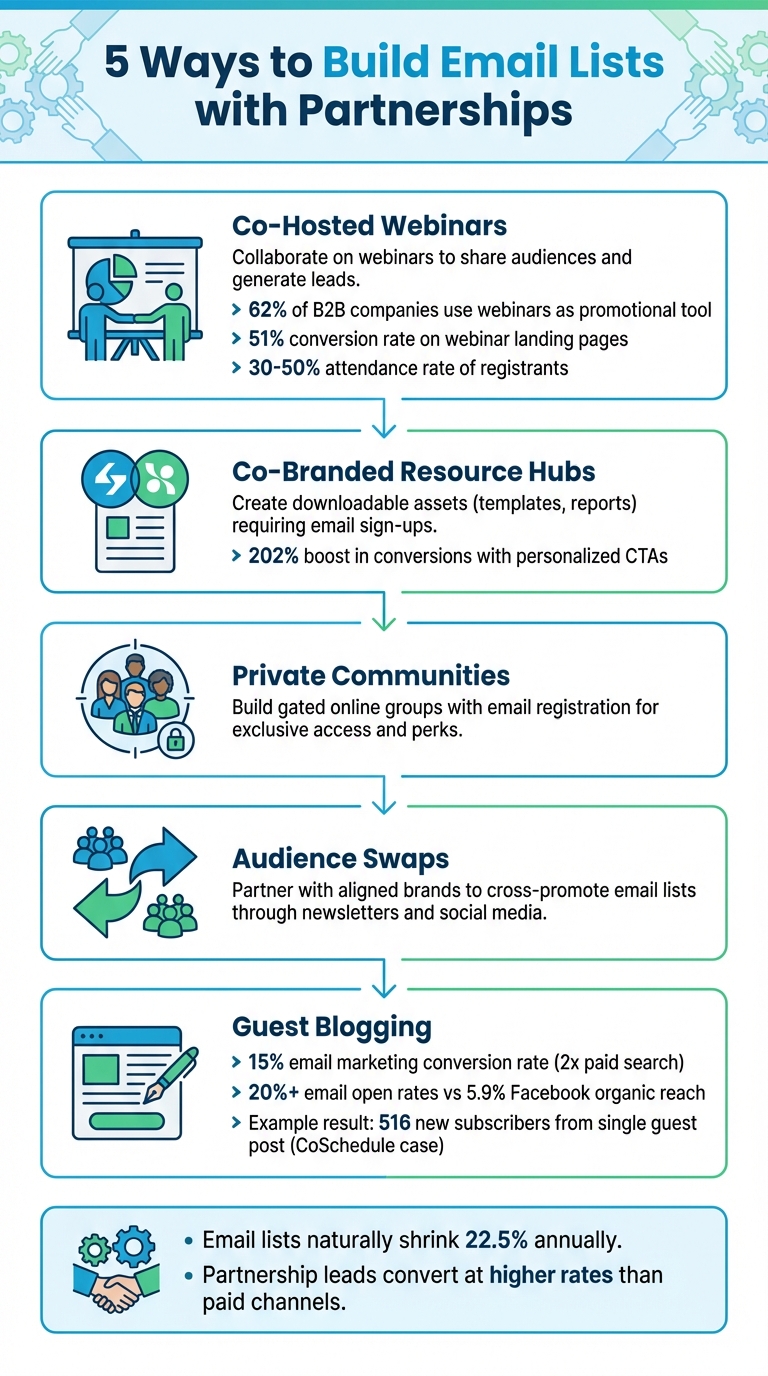
5 Partnership Strategies to Build Email Lists
How to build an email list. Easy beginner strategies to grow an email list
sbb-itb-a84ebc4
1. Co-Hosted Webinars and Online Events
Teaming up with another business to co-host webinars is a smart way to expand your reach without stretching your budget. It’s a win-win: 62% of B2B companies already rely on webinars as a key promotional tool, and webinar landing pages can convert up to 51% of visitors into leads. By sharing the promotional efforts, you gain access to each other's audience, effectively doubling your exposure.
But success hinges on selecting the right partner. Aim for a business with a similar audience size to ensure both sides benefit equally. Your webinar topic should hit the sweet spot where your audience’s needs, your partner’s expertise, and your goals align. To maximize attendance, both partners should promote the event through email campaigns, social media (tagging each other), and website banners.
To drive sign-ups, create a sense of urgency. Phrases like "limited spots available" or "one-time event" encourage quicker registrations by making the opportunity feel exclusive. Attendance rates typically range from 30% to 50% of registrants, so send automated reminders a week, a day, and an hour before the event to boost turnout.
The benefits don’t stop once the webinar ends. Record the session and host it on a landing page as a gated resource to keep collecting leads over time. After the event, follow up within 24 hours. Send a thank-you email to attendees with the recording link and a clear next step, and a separate "sorry we missed you" email to non-attendees.
To keep things running smoothly, divide tasks strategically. Use shared Google Docs for planning and tools like Zapier to sync leads between both partners’ marketing systems. Establish a written agreement upfront covering lead-sharing, asset ownership, and how you’ll track which partner brought in specific registrants. This clarity ensures both parties benefit equally from the collaboration.
2. Co-Branded Resource Hubs and Content Libraries
Building on partnership strategies, a co-branded resource hub is a smart way to combine efforts and generate leads over time. By pooling resources, both brands can create a shared library of valuable materials - like e-books, templates, or whitepapers - hosted on a co-branded landing page that requires an email sign-up. Using an email marketing and automation tool can help manage these new leads effectively. The beauty of this approach? You split the workload. One partner might focus on writing, while the other handles design, and both benefit from tapping into each other's audience base.
Focus on content that solves problems quickly. Templates and checklists often perform better than lengthy guides because they offer instant value. For example, salary negotiation templates, decision-making flowcharts, or "starter kits" can resonate deeply with users. Want to boost credibility? Collaborate on original research or create industry reports - like a joint study on remote work trends - to position both brands as thought leaders.
Make the sign-up process as easy as possible. Personalized calls to action can boost conversions by 202% compared to generic "subscribe" buttons, so tailor your messaging for each asset. Start with a simple email address field to lower the barrier for users, and use the confirmation page to request additional details like job title or company size. To build trust and transparency, ensure the landing page prominently displays both logos and mentions of the partnership throughout the copy.
When it’s time to launch, coordinate a simultaneous rollout across email, social media (with mutual tagging), and blog posts. Use unique tracking URLs for each partner to monitor performance across different channels.
3. Private Online Groups and Communities
Private online groups are a powerful way to strengthen partnerships and connect with warm leads. By co-managing a members-only community with a trusted partner, you can tap into each other's audiences and build on established trust. A partner's credibility extends naturally to your community, creating a win-win situation for both parties.
To make the most of this strategy, gate the group with an email sign-up. This not only captures leads but also adds a sense of exclusivity, making membership feel valuable rather than transactional. Once members join, focus on fostering connections. Host live Q&A sessions, share behind-the-scenes content, or offer exclusive workshops - each requiring email registration for access. As Christi Norfleet Stafford from Automation on a Mission puts it:
"The cornerstone of organic growth is relationships. Developing and nurturing customer and client relationships over time will lead to a better 'know, like and trust' factor and in turn loyal customers and repeat business".
To keep members engaged, consider offering special perks like early access to products, exclusive discounts, or downloadable resources available only to email subscribers. You can also repurpose popular discussions from the group into PDF guides or toolkits that require an email address to download.
For promotion, coordinate with your partner to announce the group to both of your audiences at the same time. This doubles your reach without increasing your marketing spend. By sharing responsibilities, you can grow the community efficiently while keeping costs in check.
4. Audience Swaps and Cross-Promotions
Collaborative strategies can be taken a step further with audience swaps, a smart way to grow your email list without stretching your marketing budget. This approach involves partnering with another brand to mutually promote each other's email lists, helping both parties expand their reach.
The success of an audience swap lies in choosing the right partner. Look for brands that share a similar audience but aren't direct competitors. For instance, a skincare company might collaborate with a wellness brand, or a general SEO agency could team up with a local SEO specialist. As Mailchimp wisely points out:
"If 2 brands don't align in tone, values, or reputation, the partnership can feel forced or confusing to customers".
Start by creating a list of potential partners that align with your audience and values. Once you've found the right match, plan a joint campaign that spans email marketing platforms, social media, and blog content. A co-branded landing page featuring both logos can make the collaboration feel seamless and professional. To keep things measurable, use unique UTM parameters or tracking links to identify which partner is driving the most leads.
It's also important to establish clear terms. Draft a written agreement that outlines key details like goals, lead-sharing protocols, content ownership, and timelines. To maintain privacy compliance, include a disclaimer on your signup forms to inform users that their contact details may be shared with the partner brand. This transparency builds trust and ensures the partnership benefits both sides.
Before diving into a full-scale collaboration, consider starting small. Test the waters with a lower-commitment initiative, like a social media shout-out or a guest blog post. This lets you gauge audience reaction and build trust before scaling up.
5. Guest Blogging and Content Exchanges
Guest blogging is a smart way to connect with a partner's established audience while boosting your credibility. By contributing well-crafted, valuable content that includes a targeted call-to-action (CTA), you can tap into an audience that already trusts your partner's expertise. This approach blends trust-building with direct lead generation, offering a win-win for both parties.
To make this strategy work, pair your guest post with a lead magnet that directly ties into the topic you’re covering. Forget generic CTAs like "Subscribe to our newsletter." Instead, offer something highly relevant and useful. Take this example: back in 2015, Nathan Ellering, CoSchedule's Head of Content, wrote a guest post for the Convince and Convert blog titled "33 Ways Your Social Media Plan Will Make You More Successful." Alongside the post, he offered a free social media plan template. The result? CoSchedule gained 516 new email subscribers from that single post.
Content exchanges take this idea a step further. When you and a partner trade guest posts, both brands benefit by reaching new audiences, building backlinks, and strengthening SEO. Plus, it positions both parties as thought leaders in their respective fields.
Here’s why this matters: email marketing, for example, boasts a conversion rate of about 15% - nearly twice as effective as paid search. To fully capitalize on this, make your CTA impossible to miss. Place it in high-traffic sections of your post, use direct language like "Get Your Free Template", and add a brief reassurance such as "We won’t share your email" to ease any concerns.
Success in guest blogging and content exchanges hinges on careful planning. Start by identifying blogs with audiences that align with your own. Look for niche sites with similar but non-competing interests. When pitching, focus on topics that genuinely help their readers while highlighting your expertise. Finally, track your results with a dedicated landing page to monitor subscriber sign-ups and evaluate the effectiveness of each partnership, or master ClickFunnels 2.0 to streamline your lead capture process.
Conclusion
Teaming up with strategic partners isn't just a clever move for growing your email list - it’s a reliable way to achieve long-term growth that outshines traditional methods. Using the right marketing funnel resources can help streamline this process. While paid ads might give you quick exposure, they often bring in less-engaged leads. On the other hand, partnerships open the door to audiences who already trust and value your partner’s recommendations. As Tom Orbach from HubSpot aptly says:
"Growing your email list isn't just marketing. It's relationship building at scale. It quietly builds trust".
The data speaks for itself. Email marketing consistently delivers strong ROI, and leads gained through partnerships tend to convert at higher rates compared to those from paid channels. Plus, email is considered owned media - giving you control that social media platforms simply can’t match. For example, Facebook’s average organic reach sits around 5.9%, while email open rates often surpass 20%.
The five strategies we’ve discussed - co-hosted webinars, co-branded resource hubs, private communities, audience swaps, and guest blogging - all share one standout benefit: they allow you to share costs while dramatically expanding your reach. Instead of painstakingly growing your list one subscriber at a time, these approaches let you tap into established audiences that already align with your goals. As Brian Morris puts it:
"An engaged email list is a company's biggest asset since it is a portion of owned media or media channels your organization has complete control over".
To get started, identify one complementary partner - someone targeting a similar audience but not competing directly - and try out one of these strategies. Then, adjust and scale based on what works. Keep in mind, your email list naturally shrinks by about 22.5% annually due to unsubscribes and outdated addresses, so consistent list-building isn’t just a good idea - it’s necessary to keep your growth momentum. The partnerships you form today will lay the groundwork for tomorrow’s success.
FAQs
How can I find the right partner for a co-hosted webinar?
To choose the ideal partner for a co-hosted webinar, focus on brands that align with your niche and cater to a similar audience. Seek out partners who bring something distinct to the table, whether it’s specialized knowledge, established trust with their audience, or access to a broader group of potential attendees.
The best partnerships work when both sides benefit equally - sharing resources and promoting the webinar to their respective audiences. Teaming up with non-competing brands can help you extend your reach, strengthen your reputation, and grow your email list more efficiently. Plus, you can tap into your partner’s strengths without stretching your marketing budget too thin.
What are some tips for creating a successful co-branded resource hub?
Creating a co-branded resource hub offers a great opportunity to team up with a partner and reach a broader audience. To make it work, here are some practical tips:
- Align your goals and audience: Ensure both brands are on the same page when it comes to objectives, and that you're targeting audiences that complement each other. This way, the hub provides meaningful value for everyone involved.
- Deliver top-notch content: Work together on creating resources like guides, templates, or toolkits that highlight both brands' expertise while offering practical benefits to users. Quality content is key to standing out.
- Promote as a team: Combine efforts to spread the word. Use joint campaigns, email blasts, and social media posts to drive traffic to the hub, making the most of each brand's marketing reach.
A well-executed co-branded hub not only strengthens partnerships but also boosts credibility and helps grow your audience - especially your email lists.
How can I stay privacy-compliant when sharing audience data in partnerships?
To stay compliant with privacy laws during audience swaps or data-sharing partnerships, it's crucial to follow regulations like the California Consumer Privacy Act (CCPA). This means offering clear opt-out options for consumers and honoring any opt-out signals they provide. Additionally, make sure your privacy policies are up-to-date, clearly outlining how data is shared and used.
If you're collaborating on co-marketing campaigns, avoid sharing personal data for advertising purposes unless you have proper consent. Activities like retargeting or using lookalike audiences must align with privacy laws, even if no money changes hands. By maintaining transparency and following these rules, you not only safeguard your audience's trust but also ensure your business remains on the right side of the law.